TOS Learning Management Systems
Site blog
Daily Reflection
November 18, 2025
“Some give generously and gain more; others are too stingy and become poor.”
Proverbs 11:24
Generosity opens the door to abundance; selfish hoarding closes that door, bringing only loss. What we hold onto tightly will eventually be lost; but what we give freely will multiply in unimaginable ways.
Andrew Carnegie, a Scottish-American industrialist and philanthropist, was one of the wealthiest men of the late 19th century. However, he understood that wealth was not something to be accumulated for personal gain. He famously said, "To die rich is a disgrace," and lived his life with this conviction. Carnegie donated over $350 million throughout his life to promote social progress—establishing over 2,500 public libraries, supporting education, and advancing scientific research.
In the process of giving generously, Carnegie gained far more than material wealth: a legacy that influenced generations, a testament to moral responsibility, and countless lives transformed. His story reveals a deeper truth—God's economy is not measured by how much we retain, but by how much we are willing to give. True abundance lies not in accumulation, but in the generosity of blessing others and glorifying the Creator—for He first freely gave to us.
Proverbs 11:24 reminds us once again that true wealth is not about how much we possess, but about how much we are willing to give our lives to others. When we are willing to give generously, we step into God's abundance, leaving a life impact that transcends material things and glorifying the Lord who first gave to us.
"The happiest people are not those who receive more people, but those who give more people."
DAILY REFLECTION
“One person gives freely, yet gains even more; another withholds unduly, but comes to poverty.”Proverbs 11:24
Generosity opens the door to abundance, while selfish hoarding closes it and leads only to loss. What we clutch tightly slips away, but what we release freely multiplies in ways beyond measure.
Andrew Carnegie, the Scottish-American industrialist and philanthropist, rose to become one of the wealthiest men of the late 19th century. Yet he understood that wealth was not meant to be stored up for oneself. He declared, “The man who dies rich dies disgraced,” and lived by that conviction. Carnegie gave away over US$350 million to causes that uplifted society—founding more than 2,500 public libraries, supporting education, and advancing scientific research.
In giving freely, Carnegie gained something far greater than material riches: a legacy of influence, a testimony of moral responsibility, and the transformation of countless lives. His story illustrates a deeper truth—that God’s economy is not measured by what we keep, but by what we release. True abundance flows not from accumulation, but from generosity that blesses others and honors the Creator, who first gave freely to us. May his example remind us that the richest life is not the one filled with possessions, but the one poured out in generosity.
Proverbs 11:24 reminds us that true richness is not found in accumulation but in a life poured out to bless others. When we give freely, we step into God’s abundance, leaving behind a legacy that outlasts possessions and honors the One who first gave to us.
"The happiest people are not those getting more, but those giving more."
Daily Reflection
November 17 , 2025
" He who conceals his sins will not prosper, but he who confesses and renounces his sins will find mercy. "
Proverbs 28:13
When a person conceals their sins, it's like a spiritual infection that continues to grow — hindering growth, robbing peace, and preventing blessings. Hidden sins can never be healed; only repentance can bring restoration.
Augustine of Hippo, born in North Africa in 354 AD, is one of the most influential voices in Christian history. His early life was filled with unease and a thirst for meaning, yet he constantly tried to escape his inner turmoil—pursuing success while ignoring the turmoil deep within his heart.
However, everything changed when Augustine met Christ. He not only confessed his sins but also openly poured out his heart before God and resolved to abandon his former life. In repentance, he experienced the freedom that grace brings. Augustine became a courageous witness to the truth, proving that no one is beyond the reach of redemption as long as they are willing to humble themselves, confess their sins, and turn back to God.
His life tells us that true prosperity lies not in concealing our shortcomings, but in exposing them to the light of God's mercy. Blessings do not come to the proud, but to those who are willing to confess their sins, repent, and turn away from the old ways. May Augustine's example remind us that repentance is the gateway to peace, growth, and joy in walking in the truth of God's liberation.
Proverbs 28:13 teaches us that honesty with God brings wholeness, while secrecy leads to spiritual stagnation. True prosperity — peace, integrity, joy, and fellowship with God — comes not from perfection, but from choosing transparency, humility, and a transformed, repentant heart.
" Confessing your sins opens the door to mercy. Honesty invites healing. Submission guides transformation. "
DAILY REFLECTION
“Whoever conceals their sins does not prosper, but the one who confesses and renounces them finds mercy.”
Proverbs 28:13
When a person covers up sin, it festers like a spiritual infection - blocking growth, robbing peace, and withholding blessing. Hidden sin is never healed; only repentance brings restoration.
Augustine of Hippo, born in 354 AD in North Africa, stands as one of the most influential voices in Christian history. His early years were marked by restlessness and a desperate search for meaning, yet he tried to outrun his own brokenness—seeking success while ignoring the turmoil within.
But everything changed when Augustine encountered Christ. He did not merely acknowledge his sin; he confessed it openly before God and turned away from his former life. In repentance, he discovered the freedom of grace. Augustine became a bold witness to the truth that no one is beyond redemption when they humble themselves, confess, and turn back to God.
His life teaches us that true prosperity is not found in concealing our flaws but in exposing them to the light of God’s mercy. Blessing flows not to the proud but to the repentant—those who dare to confess and forsake their old ways. May Augustine’s example remind us that repentance is the doorway to peace, growth, and the joy of walking in God’s liberating truth.
Proverbs 28:13 teaches that honesty before God leads to wholeness, while secrecy leads to spiritual stagnation. True prosperity - peace, integrity, joy, and fellowship with God - flows not from perfection, but from a repentant heart that chooses transparency, humility, and transformation.
“Confession unlocks mercy. Honesty invites healing. Surrender leads to transformation.”

DAILY REFLECTION
“How much better to get wisdom than gold, to get insight rather than silver!”
Proverbs 16:16
Wisdom is not merely information or intelligence; it is the ability to see life through God’s eyes, to make decisions aligned with His heart, and to walk in ways that honor Him.
Billy Graham spent more than seven decades preaching the Gospel across the world, speaking to over 200 million people in person. With such global influence came opportunities for immense wealth and status, yet Graham consistently chose the path of wisdom. He understood that true success was not measured by possessions or applause, but by faithfulness to Christ. He lived simply, refused to commercialize his ministry, and established strong accountability structures to guard against the misuse of money or power.
He once said, “When wealth is lost, nothing is lost; when health is lost, something is lost; when character is lost, all is lost.” This conviction reveals the essence of wisdom — valuing integrity above gain, character above comfort, and God’s truth above worldly success. Graham’s choices reflected a heart anchored in divine perspective, demonstrating that wisdom is not about what we achieve, but about how we live before God.
His life reminds us that wisdom is not passive knowledge but active obedience — a daily decision to walk in God’s ways, guard our integrity, and treasure His truth above all else.
Proverbs 16:16 challenges us to examine what we truly treasure. Are we chasing financial gain or pursuing the deeper riches of God’s truth? When we seek wisdom first, everything else falls into its rightful place.
“The greatest legacy we can leave is not wealth, but the truth of God’s Word.”
-Billy Graham
Daily Reflection
November 13, 2025
“Come to me, all you who are weary and burdened, and I will give you rest.”
Matthew 11:28
When we feel tired, broken, and approaching the end of our lives, Jesus invites us to lay our burdens at His feet and receive a peace that the world cannot give.
Mary is a nurse working at a New York City hospital. During the height of the COVID-19 pandemic in 2020, she was on the verge of a mental breakdown. For months, she worked 14-hour days, surrounded by illness, death, and fear. Every day, she held the hands of critically ill patients—because their families couldn't be by their side. Every night after get off work, she would sit alone in her car crying before driving home, her mind suffocating under the weight of endless pain.
One evening, she was sitting in her car, turned on the radio, and heard a pastor reading from the Gospel of Matthew: “Come to me, all you who are weary and burdened, and I will give you rest.” At that moment, she prayed softly with tears in her eyes: “Jesus, I really can’t go on anymore, please give me rest.”
In that brief prayer, she felt a change—not in her circumstances, but in her heart. She later said, “The hospital is still chaotic, and patients are still dying, but I am no longer carrying all of this alone. I feel that He is with me.”
From then on, she would pray quietly before going to work every day, finding renewed strength in faith to care for others. Her colleagues noticed an extraordinary peace emanating from her, transcending the storms around her.
Matthew 11:28 reminds us that Jesus is a compassionate shepherd who understands our weariness. Even today, He invites us—when life's burdens weigh us down, when our hearts are weary—to come before Him. We don't need to be perfect; simply bring our pain, and we can find true rest in Him—a rest that no achievement, wealth, or earthly comfort can provide.
"A resting mind is a creative mind." — John Muir

DAILY REFLECTION
“Come to me, all you who are weary and burdened, and I will give you rest.”
Matthew 11:28
When we are weary, broken, and at the end of ourselves, Jesus invites us to lay our burdens at His feet and receive a peace that the world cannot give.
Mary was working as a nurse in a hospital in New York City. During the height of the COVID-19 pandemic in 2020, she found herself on the edge of physical and emotional collapse. For months, she worked 14-hour shifts, surrounded by sickness, death, and fear. Every day, she held the hands of dying patients whose families couldn’t be there. Every night, she cried alone in her car before driving home — utterly drained and haunted by the weight of human suffering.
One evening, as she sat in her car and turned on the radio, she heard a pastor reading from the Gospel of Matthew: “Come to me, all you who are weary and burdened, and I will give you rest.” At that moment, she whispered through tears, “Jesus, I can’t do this anymore. Please give me rest.”
In that prayer, she felt something shift — not her circumstances, but her heart. She later said, “The hospital was still chaotic, people were still dying, but I wasn’t carrying it alone anymore. I felt His presence beside me.”
From then on, she began each shift with a quiet prayer, finding renewed strength to care for others. Her colleagues noticed a peace about her that defied the storm around them.
Matthew 11:28 reminds us that Jesus is a compassionate Shepherd who understands our fatigue. His invitation still stands today: when life feels too heavy, when our hearts grow tired, we are welcome to come — not with perfection, but with our pain — and find in Him the true rest that no achievement, possession, or human comfort can ever provide.
“The restful mind is a creative mind." - John Muir

Daily Reflection
November 12, 2025
“Rest now, and know that I am God; I will be exalted among the nations, I will be exalted over the whole earth.”
Psalm 46:10
True and lasting peace does not lie in your ability to control your environment, but in your trust in the Lord who is in control of everything.
In 2018, twelve young Thai soccer players and their coach were trapped in a cave deep in the mountains—floodwaters rose, darkness enveloped them, and hope dwindled. For seventeen days, the world prayed for them.
Yet, within that suffocating cave, a profound tranquility prevailed. The instructors led the children in quiet meditation and prayer; while outside the cave, people of different nationalities and faiths joined together in pleading for a miracle. Unexpectedly, everyone was rescued safely.
When the voices of fear are loudest, God invites us to be quiet—not because the storm has passed, but because He is greater than the storm. Quietness is not weakness, but a trust; a deep inner conviction that even if we cannot see a way out, God is already at work.
When chaos surrounds you, remember—the God who brings light in the dark cave can also bring peace to your heart. Be quiet, and know that He is God.
Psalm 46:10 calls us to lay down our struggles of fear and anxiety, to quiet our hearts before God, and to acknowledge His unshakeable sovereignty.
"The foundation of peace is God's trustworthiness and the truth of His nature and promises."

DAILY REFLECTION
“Be still, and know that I am God; I will be exalted among the nations, I will be exalted in the earth.”Psalm 46:10
Lasting peace doesn’t come from controlling your circumstances, but from trusting the One who controls everything.
In 2018, twelve boys and their soccer coach were trapped deep within Thailand’s Tham Luang cave — surrounded by rising floodwaters, darkness, and dwindling hope. For seventeen days, the world held its breath.
Yet, inside that suffocating cave, there was stillness. The coach led the boys in calm meditation and prayer. Outside, people across the globe lifted their voices to heaven, pleading for a miracle. And against all odds, every life was saved.
In moments when fear shouts the loudest, God invites us to be still — not because the storm is gone, but because He is greater than the storm. Stillness is not weakness; it is trust. It is the quiet assurance that even when we can’t see the way out, God is already working.
When chaos surrounds you, remember: the same God who brought light into that cave can bring peace into your heart. Be still — and know that He is God.
Psalm 46:10 calls us to surrender our fears and frantic efforts, to quiet our hearts before God, and to recognize His unshakable authority.
“Peace is rooted in the trustworthiness of God and the integrity of His character and promises.”
Daily Reflection
November 11, 2025
"Do not be anxious about anything, but in every situation, by prayer and petition with thanksgiving, present your requests to God. And the peace of God, which transcends all understanding, will guard your hearts and your minds in Christ Jesus."
Philippians 4:6–7
What kind of world are we building when we choose compassion over revenge?
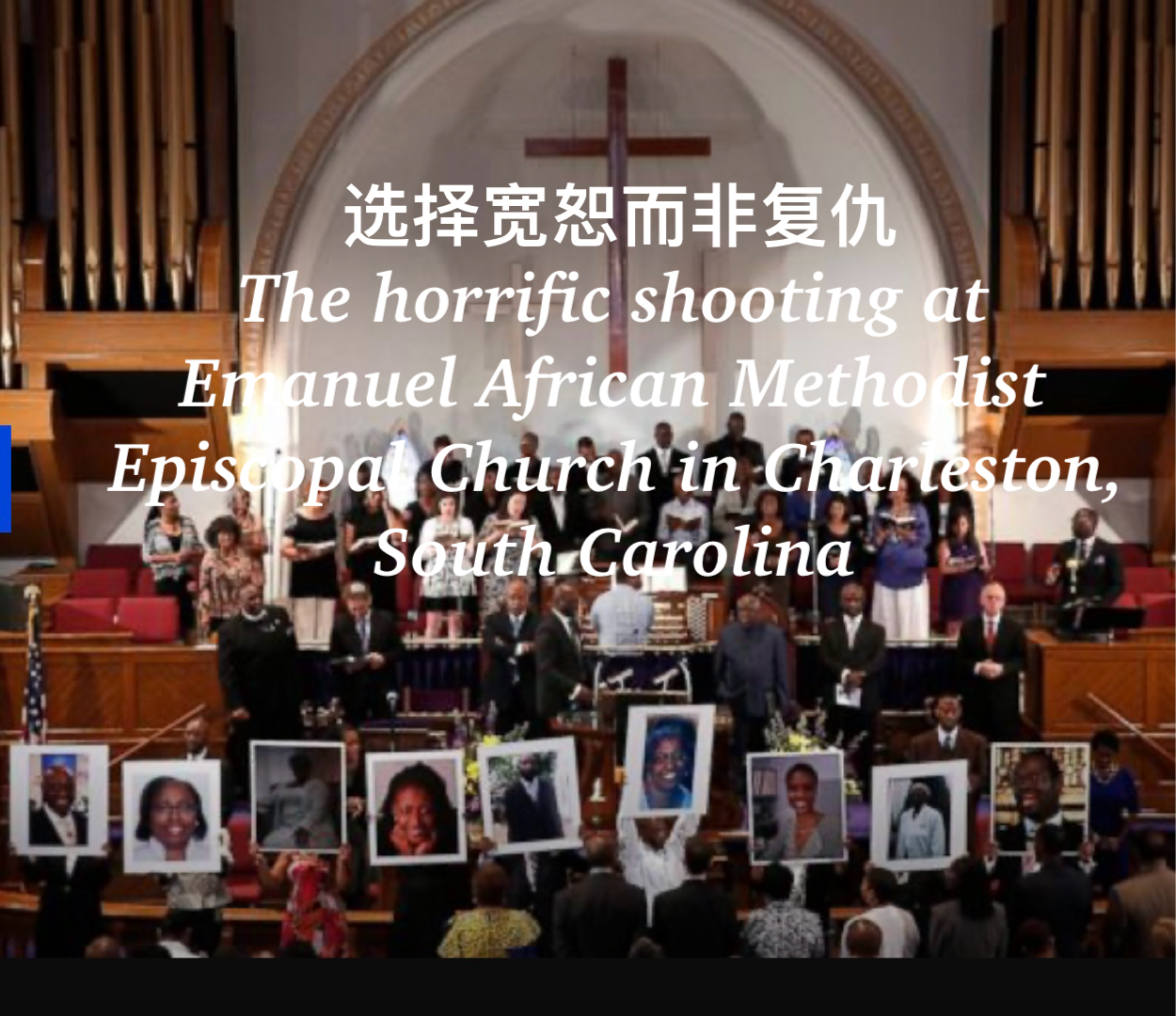
On June 17, 2015, a 21-year-old white man stormed into the Emmanuel African Methodist Church in Charleston, South Carolina, and opened fire during a Bible study, killing nine Black worshippers, including Nadine Collier's mother, Ethel Lance.
At the killer's first court hearing, the victim's family was invited to speak. Many expected to hear words of anger, condemnation, and hatred. However, Nadine stood before the man who had taken her mother's life and calmly uttered words that shook the entire room: "You took something extremely precious from my life, but I forgive you. You hurt me, and you hurt many others. May God have mercy on your soul."
Her response was not out of weakness or escapism, but from a profound faith—a peace that transcends reason. Nadine chose not to let hatred define her; she chose forgiveness.
This moment invites each of us—regardless of belief—to consider the possibilities that forgiveness can bring. Forgiveness does not erase pain or injustice, but it can break the cycle of revenge, freeing the wounded from their wounds and opening a path to healing for a broken world.
For the survivors of Charleston, their grief became a testament, their forgiveness a silent resistance to hatred, and their faith a source of strength that many still find difficult to comprehend.
Philippians 4:6–7 reminds us that the way from anxiety to peace is to surrender our worries to God in prayer of thanksgiving. When we trust in Him, His peace, which transcends human understanding, will strengthen and protect our hearts in Christ.
Forgiveness may not be able to change the past, but it can change the future.