Tyrannus Online Seminary
Site blog
 DAILY REFLECTION
31 July 2026
“Dear friends, do not be surprised at the fiery ordeal that has come on you to test you, as though something strange were happening to you.”
1 Peter 4:12
Many years ago, I met Pastor Arthur while he was faithfully shepherding a small church. During a quiet time of prayer, God placed a compelling burden on his heart—to bring the hope of Jesus Christ to women trapped in the red-light districts. Obeying this call came at a tremendous cost. Despite strong opposition from his family, he regularly entered these dangerous areas, sharing the gospel and offering freedom from the exploitation of the syndicates that controlled them.
His ministry soon attracted criticism not only from his family but also from his church leadership. Misunderstood and rejected, he was eventually removed from his pastoral position. Yet Pastor Arthur refused to abandon God’s calling. As an independent evangelist, he continued ministering to the broken and forgotten. At one point, his work was even misunderstood by the authorities, and he was interrogated by the police on suspicion of human trafficking.
The years that followed were marked by illness, financial hardship, family conflicts, disappointments, and relentless opposition. Yet none of these trials deterred him. Instead, they deepened his dependence on God. In the midst of these challenges, he persevered in his theological studies, authored several books, and eventually earned a Doctor of Divinity degree. Today, Pastor Arthur boldly proclaims Christ in churches and the marketplace, sharing God’s faithfulness with humility and passion. Through his steadfast witness, countless lives have been transformed by the gospel.
Pastor Arthur’s journey beautifully illustrates the truth of 1 Peter 4:12: “Dear friends, do not be surprised at the fiery ordeal that has come on you to test you, as though something strange were happening to you.”
Peter reminds believers that trials are not signs of God’s absence but evidence of His refining work. Just as gold is purified in fire, God uses adversity to remove pride, self-reliance, and complacency, producing humility, perseverance, and Christlike character. When our own strength fails, we discover the sufficiency of His grace. Every trial draws us into a deeper relationship with Him and strengthens our confidence in His promises.
If we remain faithful, every hardship becomes a testimony of God’s sustaining power. The fire that seems intended to destroy us often becomes the very furnace in which God shapes us for His glory. Therefore, let us face every trial with courage and hope, knowing that our faithful God is using every circumstance to prepare us for greater Kingdom impact and eternal reward.
“Fiery trials are not signs that God has abandoned us, but evidence that He is preparing us for greater Kingdom impact.”
 DAILY REFLECTION
30 July 2026
“Wake up, sleeper, rise from the dead, and Christ will shine on you.””
Ephesians 5:14
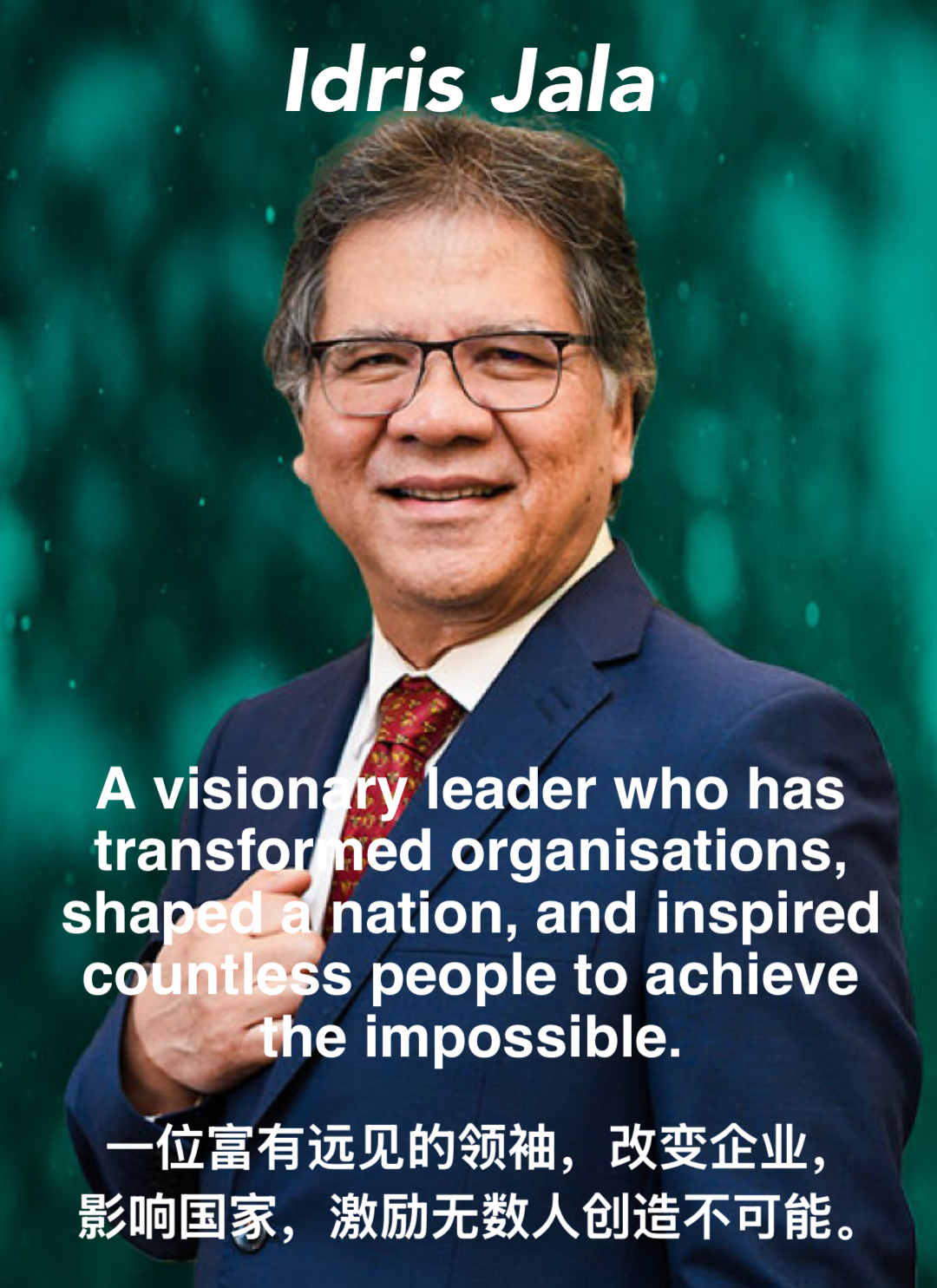
As I prayed for my dear friend Idris Jala, who was recently diagnosed with Stage 3 lung cancer, the Holy Spirit gently brought to mind the words of Ephesians 5:14: “Wake up, sleeper, rise from the dead, and Christ will shine on you.”
Idris’s life has been marked by extraordinary achievement and visionary leadership. As Managing Director of Shell Sri Lanka, he demonstrated exceptional corporate leadership. Later, as CEO of Malaysia Airlines (MAS), he courageously took the helm of what many considered a sinking ship, leading one of the most remarkable corporate turnarounds in the nation’s history. He subsequently served as a Minister in the Prime Minister’s Department, where he pioneered PEMANDU, transforming Malaysia’s public service delivery through measurable results and accountability. He has also provided strategic leadership as Non-Executive Chairman of Sunway and Heineken Malaysia. Beyond these impressive accomplishments, one of his greatest investments has been mentoring his son, Leon, through their weekly podcast, The Game of Impossible, passing on wisdom that will outlive any corporate success.
As I reflected on his journey, I sensed that God was extending a loving invitation—not merely to overcome illness, but to embrace an even greater calling. The leadership, wisdom, influence, and experience God has entrusted to him can become an even more powerful force for advancing His Kingdom and equipping the next generation. Earthly success, however remarkable, is temporary. A spiritual legacy endures forever.
This truth extends far beyond Idris. Ephesians 5:14 is God’s call to every believer, especially those in the later seasons of life. Retirement is not God’s finish line; it is often His launching pad for our greatest Kingdom impact. Years of experience, lessons learned through trials, and wisdom refined by God’s faithfulness are treasures to be invested, not stored away.
When Christ shines upon us, He renews our vision, revives our purpose, and enables His light to shine through us. Our lives become beacons of hope to those searching for meaning, encouragement to those walking through suffering, and examples of faithful living for the generations that follow.
God’s call has no expiry date. Whether we are at the height of our careers or in our twilight years, His invitation remains the same: “Wake up. Rise up. Let Christ shine through you.” Those who respond will discover that life’s greatest achievements are not measured by titles or accomplishments, but by the eternal lives they touch for the glory of God.
“God does not call us to end well by slowing down, but by shining brighter.”
 DAILY REFLECTION
29 July 2026
"The wise store up choice food and olive oil, but fools gulp theirs down."
Proverbs 21:20
Brother Sam was a humble church leader whose life beautifully illustrated the wisdom of Proverbs 21:20. When he passed away, many were surprised to discover that he had left behind millions in his bank accounts. Yet no one had ever seen him flaunt his wealth or live extravagantly. He drove a modest Japanese car, enjoyed coffee at a local kopitiam instead of premium cafés, wore a simple digital watch rather than a luxury timepiece, and preferred a humble chap fan stall over expensive restaurants.
Behind this simple lifestyle was a heart devoted to faithful stewardship. Brother Sam understood that wealth was not a trophy to display but a trust from God to manage. He consistently sponsored Orang Asli students in pursuing higher education, generously supported the poor and needy, and quietly invested in ministries that advanced God’s Kingdom. He handled every blessing God entrusted to him with wisdom, discipline, and an eternal perspective.
His life vividly illustrates the truth of Proverbs 21:20: “The wise store up choice food and olive oil, but fools gulp theirs down.” The verse is not a call to hoard wealth but to steward God’s resources wisely. The wise exercise self-control, prepare for the future, and preserve what God has entrusted to them so they can bless others when the need arises. They recognise that every resource—our finances, time, talents, opportunities, and influence—is entrusted to us not merely for personal enjoyment but for Kingdom purposes.
By contrast, the fool lives only for the moment, consuming everything without foresight or restraint. Such a life misses the joy of generous giving and the privilege of making an eternal impact.
Brother Sam’s legacy challenges each of us to ask: Am I merely consuming God’s blessings, or am I faithfully stewarding them for His glory? True wisdom is not measured by the size of our possessions, but by the faithfulness with which we manage what God has placed in our hands. A life of wise stewardship leaves a legacy that continues to bless others long after we are gone.
“Live simply, steward wisely, give generously, and leave a legacy that points others to Christ.”
 DAILY REFLECTION
27 July 2026
“Do not let any unwholesome talk come out of your mouths, but only what is helpful for building others up according to their needs, that it may benefit those who listen.”
Ephesians 4:29
Robert was a successful property developer known for his sharp tongue and quick temper. Though gifted and hardworking, he often spoke harshly to contractors and employees. His words created fear, damaged relationships, and left many discouraged. People admired his competence but avoided his company because of his cutting remarks.
Everything changed when Robert’s father passed away. In the midst of grief, he began reflecting on his own life and regretted how deeply his words had wounded others. A friend shared Ephesians 4:29 with him, and the verse pierced his heart. That day, Robert surrendered his life to Jesus Christ and asked God to transform him.
The change was unmistakable. Instead of criticism, he offered encouragement. Instead of anger, he chose patience and kindness. Even under pressure, he spoke with grace. Slowly, the atmosphere around him changed. Contractors became more cooperative, employees felt valued, and broken relationships were restored. As Christ transformed his heart, He also transformed Robert’s speech.
Paul reminds us that our words reveal the condition of our hearts. Unwholesome speech—whether gossip, harsh criticism, lies, or careless remarks—tears people down. God calls us to something far greater: to speak words that strengthen, encourage, comfort, and meet the needs of those who hear them. Every conversation is an opportunity to impart God’s grace.
Before we speak, let us ask: Will these words build others up? Will they reflect Christ’s love? Will they bring grace to those who listen? When Jesus rules our hearts, our words become instruments of healing rather than hurt, hope rather than despair. May our speech always reflect the kindness, wisdom, and love of Christ, so that everyone who hears us is strengthened and drawn closer to Him.
“The tongue is the smallest member of the body, yet it has the power to wound for a lifetime or heal for eternity.”
 DAILY REFLECTION
27 July 2026
“Brothers and sisters, we do not want you to be uninformed about those who sleep in death, so that you do not grieve like the rest of mankind, who have no hope.”
1 Thessalonians 4:13
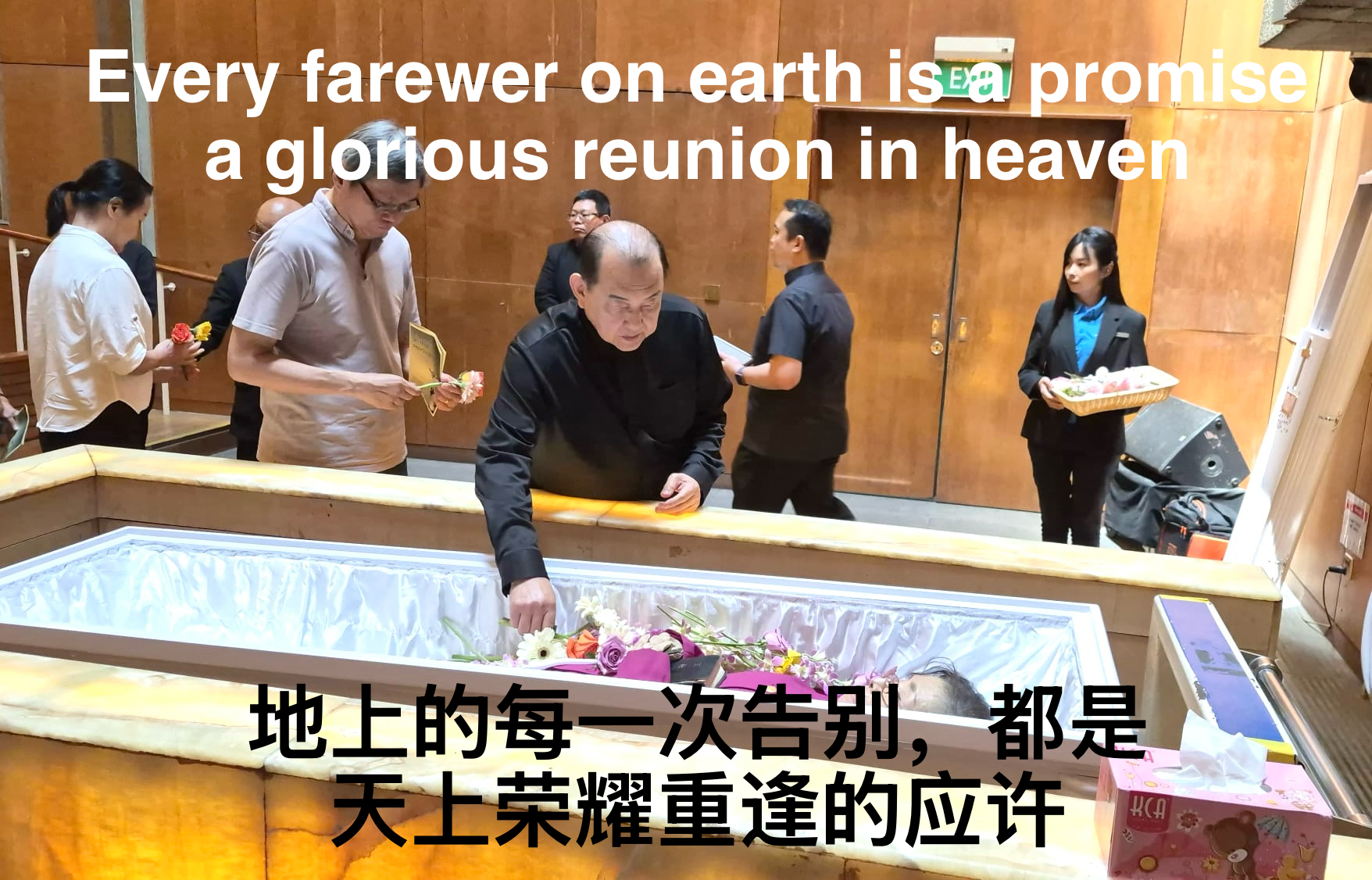
As we concluded last Friday’s cremation service at Singapore’s Mandai Crematorium, I bid farewell to my beloved eldest sister, who peacefully went home to be with the Lord at the age of 91. Nearly twenty years ago, she received Jesus Christ as her Saviour, and from that day onward lived with wholehearted devotion to Him. She faithfully read her Chinese Bible each day and persevered in prayer. Even as her heart and lungs grew weaker over the past two years, she remained steadfast, entrusting her life completely to the Lord until her final breath.
Though our family grieves her passing, we rejoice that she finished her race faithfully and now rests in the glorious presence of our Lord and Saviour, Jesus Christ. Her legacy of faith, love, and perseverance will continue to inspire our family and future generations.
The Apostle Paul reminds us in 1 Thessalonians 4:13 that believers grieve differently. We do not deny the pain of separation, nor do we suppress our tears. Yet we do not grieve as those who have no hope, because our sorrow is anchored in the certainty of Christ’s resurrection. Through His death and resurrection, death has been transformed from a hopeless end into the doorway to eternal life.
For every believer, death is not defeat but homecoming. It marks the end of pain, sickness, and sorrow, and the beginning of everlasting joy in the presence of God. More than that, it carries the glorious promise that all who belong to Christ will one day be raised in glory and reunited with Him forever.
Therefore, let every farewell remind us to live faithfully, love wholeheartedly, and place our confidence in Christ alone. For those who trust in Him, death is never the final chapter but the beginning of eternal glory. Every goodbye on earth is only for a season, for in Christ every farewell carries the promise of a glorious reunion in heaven.
“Every goodbye in Christ is only temporary, for heaven will turn every farewell into an everlasting reunion.”
 DAILY REFLECTION
24 July 2026
“Love never fails. But where there are prophecies, they will cease; where there are tongues, they will be stilled; where there is knowledge, it will pass away.”
1 Corinthians 13:8
For the first time in 20 years, my wife and I stepped into a cinema in Singapore. Our daughter had invited us to watch a touching Chinese movie, Dear You. Although it is not explicitly a Christian film, it beautifully portrays many biblical values that deeply moved my heart.
The story is a powerful reminder that true love is often quiet and unseen. It speaks of sacrificial love that expects nothing in return, faithfulness that endures through decades, forgiveness that restores broken relationships, and humble acts of kindness that leave a legacy far greater than wealth or success.
Paul declares in 1 Corinthians 13:8, “Love never fails.” These simple yet profound words reveal the eternal nature of God’s love. Unlike earthly achievements, possessions, or even spiritual gifts, which are temporary, genuine love never loses its value, never becomes obsolete, and never reaches its expiration date. It endures because it flows from the very heart of God, who is love.
Jesus demonstrated this love most perfectly at the cross. His love remained steadfast in the face of rejection, suffering, and death. Because He first loved us, we are called to love others with the same patience, kindness, humility, forgiveness, and selfless sacrifice.
Such love does not weaken under trials or disappear when it goes unnoticed. Instead, it grows stronger through forgiveness, shines brightest in humility, and leaves an eternal imprint on every life it touches. The greatest acts of love are often those known only to God, yet they become lasting testimonies of His grace.
Today, let us remember that our loving words, quiet sacrifices, generous deeds, and forgiving hearts are never wasted. Long after our titles, achievements, and possessions have faded, the love we have shown in Christ’s name will continue to echo in eternity. Love never fails because God, who is love, never fails.
“The greatest legacy is not what we leave for people, but what we leave in people through Christlike love.”
 DAILY REFLECTION
23 July 2026
“I will give you a new heart and put a new spirit in you; I will remove from you your heart of stone and give you a heart of flesh.”
Ezekiel 36:26
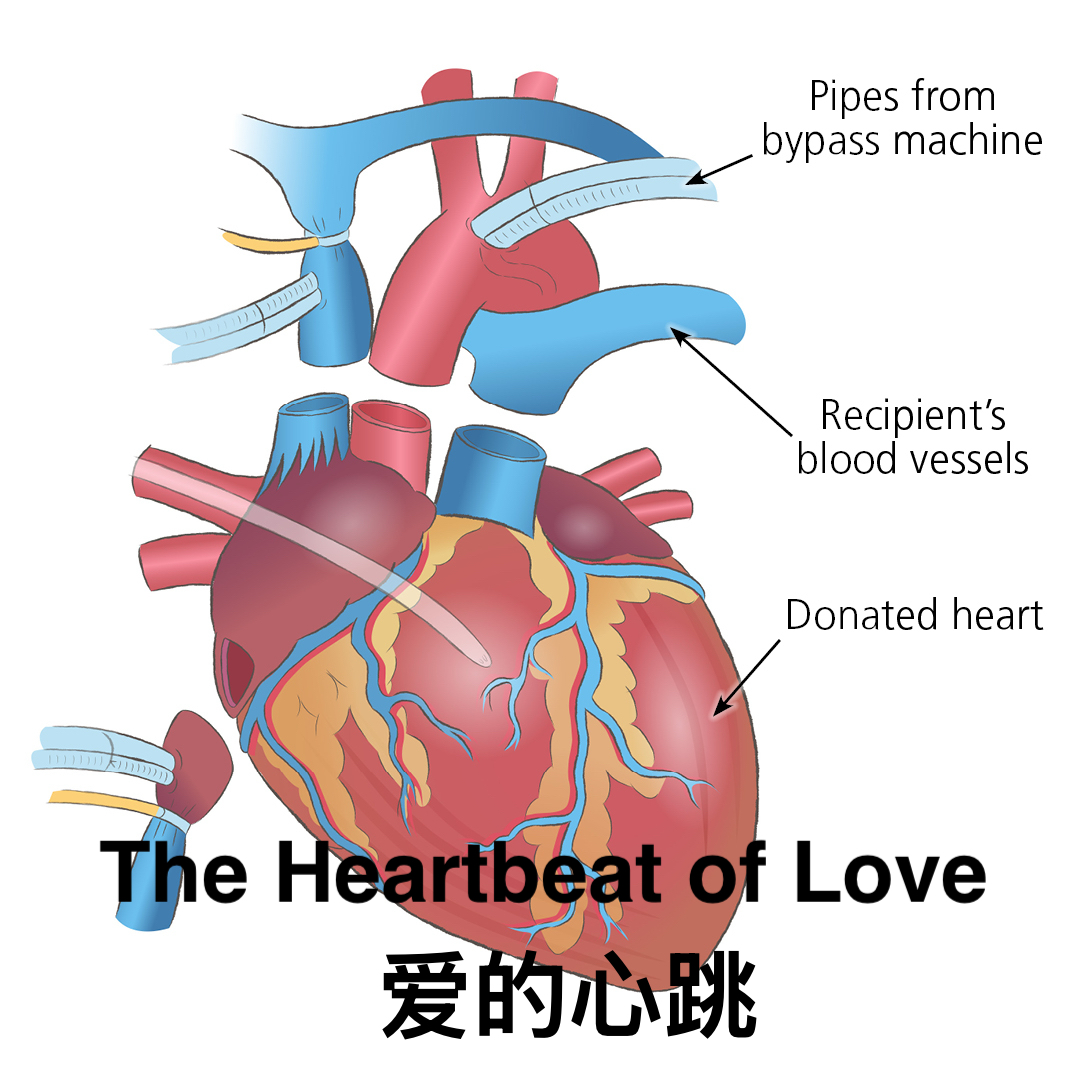
When Nancy passed away, her final gift was her heart—donated to a stranger. Yet, in God’s mysterious providence, that very heartbeat became a source of comfort for her newborn daughter, Chloe, who lost her mother just three days after birth. The baby cried inconsolably, longing for the familiar rhythm she had known in the womb. But when the heart recipient gently held Chloe, she suddenly became calm, recognising the heartbeat of her mother.
This remarkable story reminds us that love leaves a lasting legacy. Nancy’s heart continued to bring comfort even after her death. In an infinitely greater way, Jesus gave His life so that we might receive not merely physical life, but eternal life. Through Him, God offers us something even more precious—a new heart.
Christianity is about God’s transforming work from the inside out. A heart of stone is hardened by sin, pride, fear, disappointment, or past wounds. It becomes resistant to God’s voice and closed to His love. But a heart of flesh is alive to His Spirit—sensitive to His leading, eager to obey, quick to forgive, and filled with compassion.
God does more than soften our hearts; He places His Spirit within us, empowering us to live a life that reflects Christ. As we surrender to Him daily, our attitudes, desires, relationships, and actions are progressively transformed by His grace.
Just as Chloe found peace in the familiar heartbeat of her mother’s love, we find true and lasting peace in the heart of our Heavenly Father. Today, allow God to search your heart. Lay before Him every burden, every wound, every trace of pride, bitterness, or unbelief. Let Him remove your heart of stone and replace it with a heart that beats in harmony with His.
Ezekiel 36:26 is God’s promise to every believer: “I will give you a new heart and put a new spirit in you.”. When God changes your heart, He changes your life. And through a transformed life, His love will continue to touch, heal, and bless others for His glory.
“The greatest miracle is not a transplanted heart that sustains physical life, but a transformed heart that reflects the life of Christ.”
 DAILY REFLECTION
22 July 2026
“I eagerly expect and hope that I will in no way be ashamed, but will have sufficient courage so that now as always Christ will be exalted in my body, whether by life or by death.”
Philippians 1:20
In 2010, Gary and Eugene—brothers united not only by blood but also by a deep faith in Christ—joined six Malaysian FGB leaders, led by me, on a life-changing journey to the Nicaragua FGB Revival Conference. The conference reignited our passion for Christ, but what followed left an even deeper impression.
On our return, Gary and Eugene welcomed us at Las Vegas Airport and drove seven hours to Gary’s home in Los Angeles, where they graciously hosted us for two days. Their generous hospitality and Christlike love forged friendships that have endured through the years.
Years later, joy turned to sorrow when Gary was diagnosed with leukemia. In that darkest season, Eugene demonstrated extraordinary love. Though living in Taiwan, he flew across the world to donate his bone marrow to save his brother’s life. It was a costly sacrifice, offered without hesitation. By God’s grace and through the prayers of many, the transplant succeeded. Today, Gary is alive—a living testimony to God’s healing power and the transforming strength of sacrificial love.
Their story beautifully illustrates Philippians 1:20: “Christ will be exalted in my body, whether by life or by death.” Paul’s highest ambition was never comfort, success, or even survival, but that Christ would be glorified in every circumstance. Eugene embodied that same spirit. He counted the cost and willingly gave of himself so that Christ might be magnified through his life.
Our world measures success by wealth, achievements, and recognition. Scripture measures it by whether Christ is seen in us—through our love, courage, obedience, and sacrifice. When Christ becomes the centre of our lives, fear gives way to faith, selfish ambition to selfless service, and temporary pursuits to eternal purpose.
Philippians 1:20 leaves us with one searching question: Is Christ truly being magnified through my life? When He is, our lives become compelling testimonies that draw others to the Saviour.
“The greatest achievement in life is not how much we accomplish for ourselves, but how clearly Christ is seen through us.”
 Daily Reflection
21 July 2026
"For just as each of us has one body with many members, and these members do not all have the same function, so in Christ we, though many, form one body, and each member belongs to all the others."
Romans 12:4-5
If Jesus were to walk the streets of Kuala Lumpur today, where would He go first? Would He begin in a church building, or would He step into a theatre, a bustling shopping mall, a corporate office, or a university campus? I believe Jesus would go where the people are. Throughout the Gospels, He consistently met people in their everyday lives—by the sea, in homes, at marketplaces, and along crowded streets. If the Church is to fulfil the Great Commission, we must do more than invite people into our buildings; we must intentionally bring the Gospel into the very heart of culture.
Yesterday, I had the privilege of sharing the vision of Tyrannus Online Seminary (TOS) and Tyrannus Network International (TNI) at Kingdomcity. Under the visionary leadership of Pastor Mark Varughese, Kingdomcity has become one of the fastest-growing churches in the region, with approximately 70,000 people gathering for worship each week across 44 locations in 30 countries. Their unwavering commitment to reaching people wherever they are beautifully reflects the heart of the Great Commission.
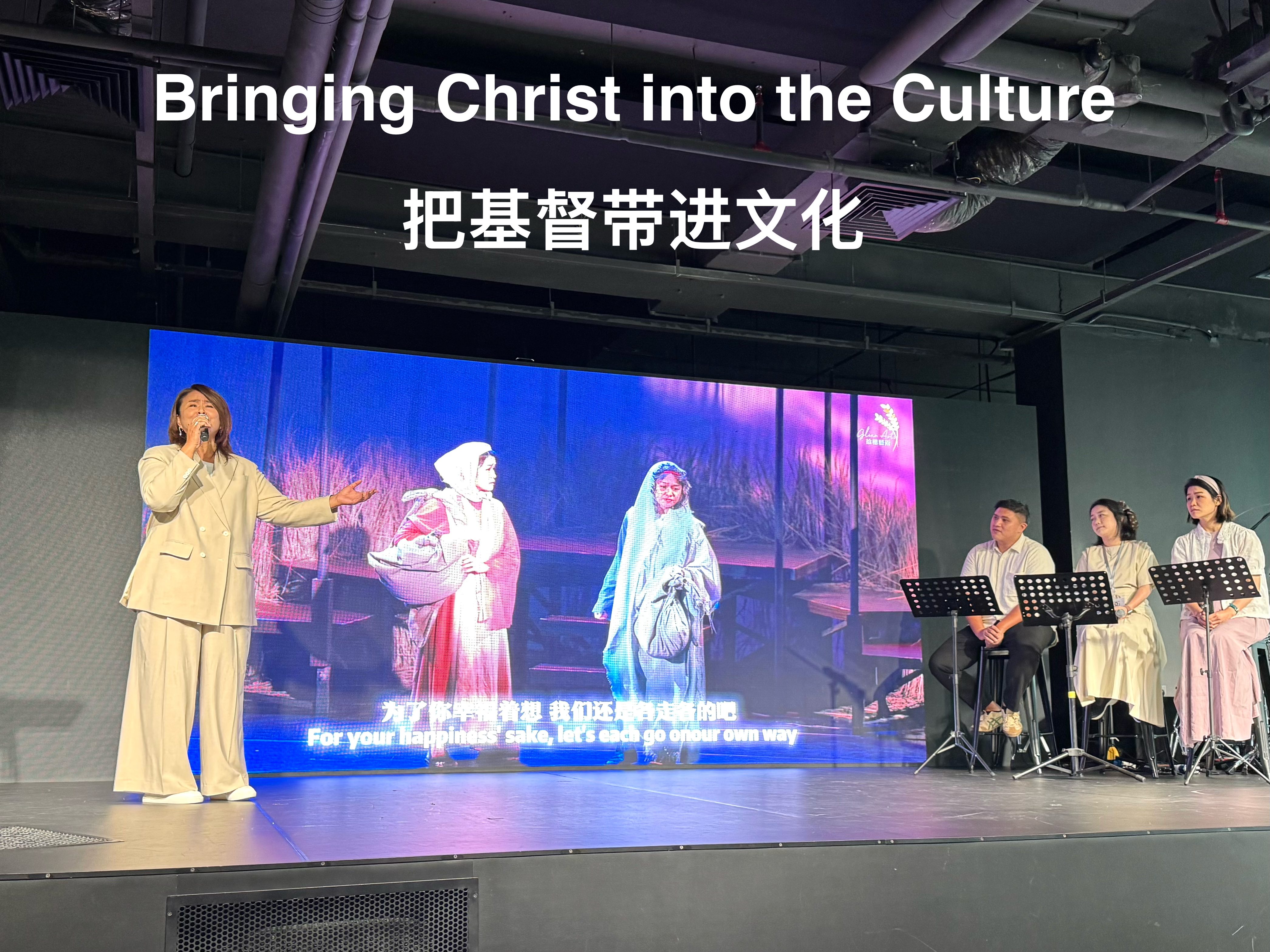
Nearly 200 guests attended the preview of the Taiwan Biblical Musical Drama, Who Is That Woman?, inspired by the beautiful story of Ruth. The production was exceptionally well crafted, with the scale and excellence of a world-class musical. More importantly, it demonstrated how God can use the performing arts as a powerful platform to communicate biblical truth, strengthen families, promote church unity, and reach people who may never step into a church.
The experience brought Romans 12:4–5 vividly to life. Paul reminds us that the Church is one body with many members, and each member has a unique function. God has not gifted every believer in the same way, but He has gifted every believer for the same purpose—to glorify Christ and build His kingdom. Some preach, some teach, some lead, some serve, and others write, compose music, act, create films, or use technology and business to influence society. Every gift, when surrendered to God, becomes a channel of His grace.
This is the vision that compels TOS and TNI. We seek to equip believers not only for ministry within the church, but also for mission in the marketplace and every sphere of society. As we collaborate with churches, Christian entrepreneurs, educators, and artists, we believe God is raising up a new generation of disciples who will influence culture with biblical truth and Christ-like excellence. When every member faithfully embraces his or her God-given calling and serves in unity, the Church becomes a living testimony of Christ’s presence. United in purpose and diverse in gifting, we can bring the hope of the Gospel into every corner of society until the world sees not merely our talents, but the transforming power of Jesus Christ.
“The future of the Church is not determined by how many people come into our buildings, but by how many believers carry Christ’s presence into every sphere of society. Every believer is a minister. Every workplace is a mission field. Every God-given gift is a tool for Kingdom transformation.”
 DAILY REFLECTION
20 July 2026
“Precious in the sight of the LORD is the death of his faithful servants.”
Psalm 116:15
I woke at 3:30 a.m. today to the news that my eldest sister had peacefully gone home to be with the Lord at 2:49 a.m. At 91 years of age, she had walked faithfully with Christ for many years. She cherished God’s Word, was devoted to prayer, and found great joy in the fellowship of her church family. Her spiritual legacy lives on through her five God-fearing daughters, whose lives continue to reflect the faith, love, and godly example she faithfully nurtured.
While our family grieves her passing, we do not grieve without hope. We rejoice in the assurance that she has completed her earthly race and now rests in the glorious presence of her Saviour, free from pain, suffering, and every earthly burden.
Psalm 116:15 offers a perspective that transforms the way believers understand death. It tells us that the death of God’s faithful servants is precious in His sight. This does not mean God delights in death itself, for death entered the world because of sin. Rather, it means that the homegoing of every believer is deeply significant and valuable to Him. God never overlooks the final moments of His children. He knows the exact time their earthly mission is complete, and He lovingly welcomes them into His eternal presence.
What appears to us as a painful farewell is, from heaven’s perspective, a joyful homecoming. For the believer, death is not a defeat but a victory. It is the doorway from a world of sorrow into everlasting joy, from temporary suffering into eternal glory, and from faith into sight.
Therefore, let us not merely prepare for a successful life but for a faithful finish. Live each day in obedience to Christ, invest in an eternal legacy, and encourage those around you to know Him personally. Then, when our own race is complete, we too can enter His presence with confidence, knowing that our homecoming will be precious in the sight of the Lord.
“When God’s faithful servant finishes the race, earth weeps, but heaven rejoices.”