泰然诺在线神学院
站点博客
 DAILY REFLECTION
20 August 2026
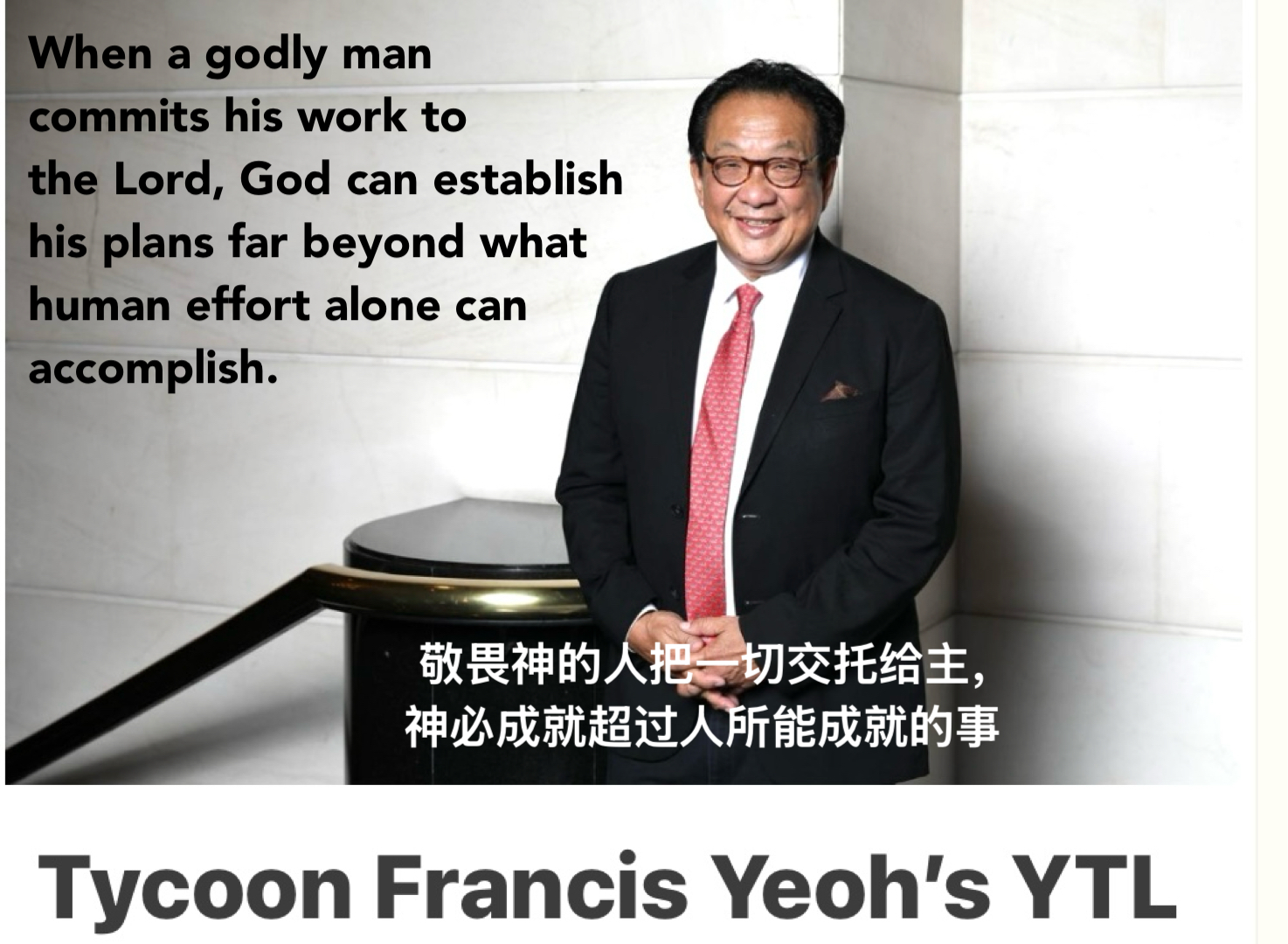
“Commit to the Lord whatever you do, and he will establish your plans.”
Proverbs 16:3
This morning, Tan Sri Sir Francis Yeoh sent me a WhatsApp message highlighting yesterday’s Forbes report: “Tycoon Francis Yeoh’s YTL Power Doubling Data Center Capacity to 2.4 Gigawatts by 2032.” As I read it, Proverbs 16:3 immediately came to mind.
This remarkable expansion is more than a story about investment, technology or capacity. It reminds me of a spiritual principle that applies to every believer: when we commit our work to God, we acknowledge that our plans ultimately depend upon Him.
The word commit carries the idea of entrusting something into another’s hands. Proverbs does not teach us to make our plans independently and then ask God to bless them. Rather, we are invited to surrender our ambitions, decisions and efforts to Him from the beginning.
A vision as bold as doubling YTL Power’s data center capacity to 2.4 gigawatts requires enormous resources, strategic foresight and human expertise. Yet Scripture reminds us that human wisdom and effort alone cannot guarantee the outcome. We plan faithfully, work diligently, and exercise wisdom—but ultimately we trust God to establish what we do.
I have known Tan Sri Francis for many years, and what encourages me is not merely his business achievements, but his consistent acknowledgement of God in his journey. It reflects an important biblical understanding of stewardship: our abilities, opportunities, resources and influence are not ultimately ours; they are entrusted to us by God.
This is where success can become significance.
God may establish our plans not simply to enlarge our own achievements, but to create opportunities, provide livelihoods, bless communities and contribute to society and future generations.
Proverbs 16:3 therefore speaks not only to business leaders undertaking great projects. It speaks to every one of us.
Whatever God has placed in your hands today—your career, business, ministry, family or responsibilities—commit it to Him.
Plan carefully. Work faithfully. Remain humble. Seek His wisdom.
Then leave the outcome in His hands.
When our work is surrendered to God, our plans become more than personal ambitions; they become opportunities for His purposes to be fulfilled through us.
“Success is not merely seeing our plans fulfilled; significance is seeing what we surrender to God established for His purpose, His glory, and the blessing of generations.”
 DAILY REFLECTION
19 Aug 2026
“Do you not know that your bodies are temples of the Holy Spirit, who is in you, whom you have received from God? You are not your own; you were bought at a price. Therefore honor God with your bodies.”
1 Corinthians 6:19-20
Last night, my good friend Clement Heng shared a meaningful and practical message at FFM Zoominar on the D’SWEETS Health Formula—seven simple principles for maintaining good health.
Clement has a deep passion for helping people understand and practise healthy living. He has authored six books on health, with his latest, Can We Live Healthily to 100?, achieving recognition in the Book of Records—a remarkable milestone that reflects his commitment to promoting healthier and more purposeful living.
As I listened to him, I was reminded that caring for our health is more than a lifestyle choice. For Christians, it is an act of stewardship and worship.
Paul makes a remarkable statement: our bodies are temples of the Holy Spirit. God has chosen to dwell within us. We are also reminded, “You are not your own; you were bought at a price.” Our lives belong to Christ, purchased through His sacrifice. Therefore, how we care for our bodies matters to God.
Clement’s D’SWEETS formula gives us a practical framework: Diet teaches us to nourish our bodies wisely; Sleep allows us to rest and recover; Water supports the body’s essential functions; Exercise keeps us active and strong; Emotion reminds us to manage stress and cultivate gratitude, forgiveness and healthy relationships; Toxin Avoidance encourages us to reduce unnecessary exposure to harmful substances; and Supplements, when appropriately used, can help address nutritional gaps.
None of these guarantees a life without sickness. Ultimately, our lives remain in God’s hands. But Scripture calls us to be faithful stewards of what He has entrusted to us.
Perhaps the deeper question is not simply, “How can I live to 100?” but “How can I live healthily and purposefully for as long as God gives me, so that I can fulfil His purposes?”
Our health affects our capacity to love, serve, work, minister and bless others.
May we therefore not merely seek to add years to our life, but life and purpose to our years—remembering that our bodies are His temple, our lives were bought at a price, and our calling is clear: Honour God with your bodies.
“Caring for our body is not just healthy living; it is faithful stewardship.”
 DAILY REFLECTION
18 Aug 2026
“Love is patient, love is kind. It does not envy, it does not boast, it is not proud. It does not dishonor others, it is not self-seeking, it is not easily angered, it keeps no record of wrongs.”
1 Corinthians 13:4-5
In 1993, when I was newly saved, I attended a Brethren church for about three years. Those were important formative years. I was faithfully taught and grounded in the Word of God, for which I remain deeply grateful. Yet as time passed, I began longing for a deeper experience of the Holy Spirit.
Then came a pivotal encounter.
My personal assistant introduced me to the late Dr Peter Tong, then President of FGB. He came to my office and prayed for me, and I experienced the baptism of the Holy Spirit. It opened a new dimension in my walk with God.
My church elders, however, held different convictions concerning this experience. After discussions, they graciously released me to attend a Pentecostal church where I could continue growing in this area of faith.
Through a brother in Christ, I was subsequently introduced to a small charismatic church. There I met Pastor Loh, a humble college president who served voluntarily as a lay pastor. We became close friends, and under his leadership I watched the congregation grow from a small gathering to nearly one hundred people.
Yet growth did not prevent conflict.
Tensions gradually developed between Pastor Loh and the church elders, a married couple who were unhappy with aspects of his leadership.
Then came a Sunday I have never forgotten.
After the service, the elders asked the congregation to remain behind. One of them produced a book in which they had recorded what they considered to be Pastor Loh’s faults and shortcomings. These accumulated grievances were then presented to justify removing him from leadership.
That incident left a deep impression upon me.
Years later, whenever I read 1 Corinthians 13, I remember that book:
“Love… keeps no record of wrongs.”
There is an important pastoral distinction here. Paul is not teaching us to ignore wrongdoing, avoid accountability, or remain silent about serious problems. Healthy churches need correction, wise leadership and sometimes difficult decisions.
But there is a difference between addressing a problem for restoration and accumulating a record for condemnation.
When we continually store another person’s failures, unresolved offenses can slowly harden our hearts. Then, during conflict, yesterday’s mistakes become today’s ammunition.
The gospel calls us to another way.
We speak truth, but we speak it in love. We address problems, but we seek restoration rather than humiliation. We forgive because we ourselves have been forgiven.
Perhaps there is a “book” in your own heart—pages containing what someone said, what they did, and how deeply they hurt you.
Ask the Holy Spirit today to help you close that book.
Love does not deny the past, but neither does it allow the past to imprison the future.
When we release resentment, extend grace and choose forgiveness, we make room for healing, reconciliation and the peace of Christ to rule in our hearts.
 DAILY REFLECTION
17 Aug 2026
“Then I said to them, ‘You see the trouble we are in: Jerusalem lies in ruins, and its gates have been burned with fire. Come, let us rebuild the wall of Jerusalem, and we will no longer be in disgrace.’”Nehemiah 2:17
There are seasons in life when something we have treasured suddenly lies broken before us. A loved one is gone. A dream is shattered. A ministry struggles. The future we once saw clearly becomes uncertain.
I experienced such a season after the sudden passing of my dear friend and ministry partner, Professor Dr Paul Cheng. His death brought deep grief, but it also left Tyrannus Online Seminary (TOS) facing an uncertain future. Important records were inaccessible, much knowledge had been carried personally by Paul, and I found myself wondering whether TOS could continue.
In that season, Nehemiah 2:17 spoke deeply to me.
Nehemiah did not ignore Jerusalem’s broken walls. He acknowledged the painful reality: “You see the trouble we are in.” There is something pastoral and comforting in those words. God does not ask us to pretend that everything is all right. Faith allows us to grieve, to acknowledge our fears and even to admit, “Lord, I do not know what to do.”
But Nehemiah did not stop at the ruins.
He said, “Come, let us rebuild.”
Those words gradually became God’s invitation to me.
In the quiet hours before dawn, I brought my fears and uncertainties to Him. Sometimes there were more tears than words. I did not have all the answers, but I began to understand that I did not need to have them all before taking the next step.
My question slowly changed from “Can I rebuild TOS?” to “Lord, will You help me rebuild?”
And faith began to rise again.
Perhaps today you are standing before your own broken wall. Something precious may have been lost, and you cannot imagine how life can ever be the same again.
Do not be discouraged by the ruins.
God meets us there.
Rebuilding does not mean forgetting what was lost. It means trusting that loss does not have to be the end of the story.
Bring your broken walls to God. Give Him your grief, your fears and your unanswered questions. Then ask Him for grace to pick up the first stone.
“You will rebuild, and what you build this time will be sturdier, because you will have built it knowing exactly what it costs to lose something.” — Georgia Clare
 DAILY REFLECTION
14 Aug 2026
“But the seed on good soil stands for those with a noble and good heart, who hear the word, retain it, and by persevering produce a crop.”
Luke 8:15
Leon Jala’s journey as a leader reminds us that Christlike character is intentionally cultivated over time. Behind his development stands the influence of his father, Idris Jala, known for his leadership in national and organisational transformation, but whose important legacy is also found in the values and faith he has sought to pass to his son.
For Leon, mentoring did not take place only through formal instruction. It grew through relationship—conversations, shared experiences, meals after church, and honest exchanges about leadership, challenges and faith. Their conversations through The Game of Impossible also provide a window into this father-son relationship, where wisdom is shared and difficult questions can be explored openly.
As Leon assumed greater leadership responsibilities at PEMANDU Group while continuing to serve as a lay pastor and worship leader, the importance of character became increasingly evident. Leadership is not merely about competence, position or achievement. Christlike leadership begins in the heart.
Luke 8:15 describes the good soil as those who hear God’s Word, retain it, persevere, and eventually produce fruit. This gives us a helpful picture of spiritual mentoring. A father cannot manufacture fruit in his children, but he can faithfully cultivate the soil—planting God’s Word, modelling integrity, correcting with love, encouraging perseverance, and demonstrating what it means to serve others.
The harvest often takes years to appear. Seeds planted in childhood may bear fruit much later in adulthood. That is why godly parenting requires patience and perseverance.
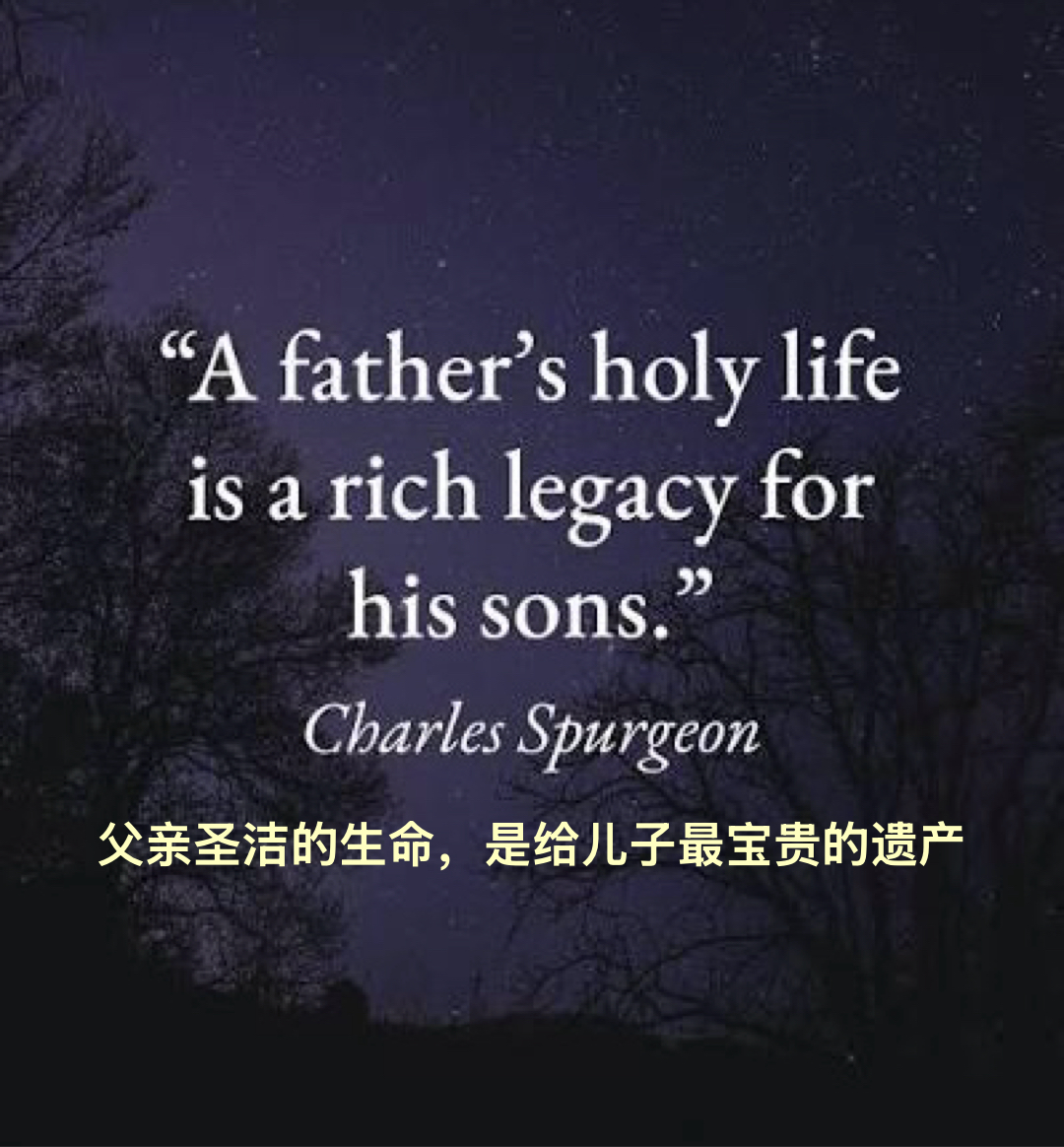
Our greatest legacy as fathers is therefore not the wealth, reputation or position we leave behind, but the character we help cultivate in the next generation. When children learn to love Christ, walk in integrity, serve humbly and influence others for God’s Kingdom, the seed has multiplied.
“A father’s greatest legacy is raising a son who walks in the footsteps of Christ.”
 DAILY REFLECTION
13 Aug 2026
“Even though I walk through the darkest valley, I will fear no evil, for you are with me; your rod and your staff, they comfort me.”
Psalms 23:4
Yesterday, Ho Sze Chieng, a corporate coach came to my office to share about his professional services. What touched me most, however, was not his expertise, but his deeply personal testimony—a story of faith, endurance, and God’s sustaining presence through an unimaginable valley.
Chieng and his wife, both active and dedicated athletes, had enjoyed more than a decade of marriage when their lives took a painful turn. Both of their children were born with rare and complex congenital conditions, including serious heart disease and immune system deficiencies.
Suddenly, their family was thrust into one of life’s darkest valleys.
They faced high-risk surgeries, mounting medical expenses, uncertain outcomes, and repeated moments when their children came dangerously close to death. There were tears, fear, exhaustion, and questions without easy answers. Yet through those difficult years, they discovered a precious truth: God’s presence does not disappear when life becomes dark.
Again and again, when resources seemed insufficient, provision came. When the future appeared hopeless, doors opened. In moments of fear and uncertainty, they experienced God’s comfort, guidance, and sustaining grace.
Ten years of tears. Ten years of prayer. Ten years of choosing, day after day, to trust God.
Their journey brings Psalm 23:4 to life:
“Even though I walk through the darkest valley, I will fear no evil, for you are with me; your rod and your staff, they comfort me.”
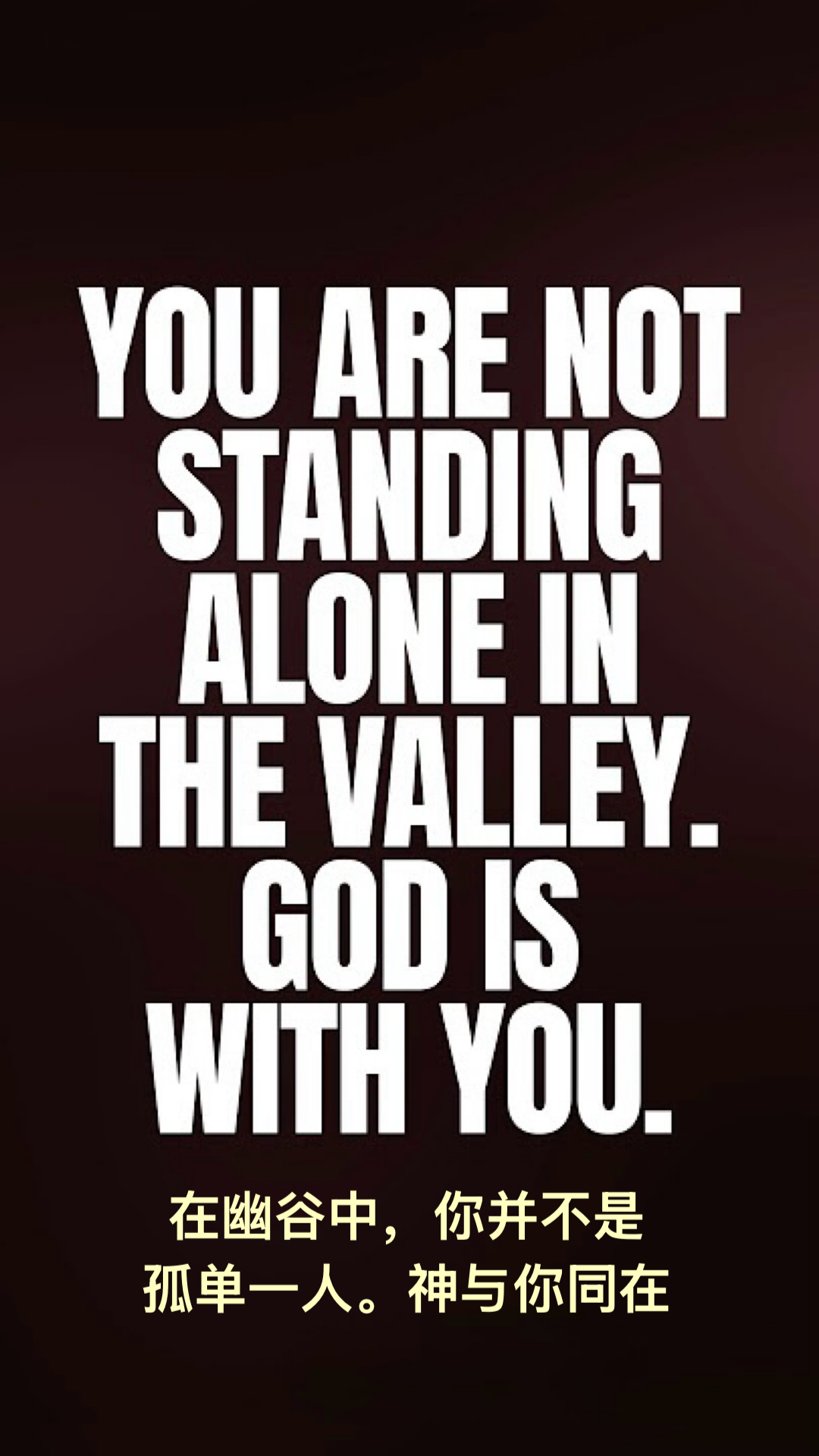
David does not say that God always keeps us from the valley. He says that God is with us through the valley. The word “through” reminds us that the valley is part of the journey, not necessarily our final destination. David’s confidence was not based on favourable circumstances, but on the presence of the Shepherd. The rod speaks of God’s protection, while the staff points to His guidance and care. Even when the path is dark and we cannot see what lies ahead, our Shepherd sees clearly and continues to lead us.
Perhaps you are passing through your own dark valley today—illness, financial pressure, family struggles, disappointment, or an uncertain future. You may not understand why God has allowed it or know when the journey will end.
Chieng and his wife’s testimony reminds us that sometimes faith means simply choosing to trust God one day at a time.
“We may not know how long the valley will last, but we know who walks with us through it.”
 DAILY REFLECTION
12 Aug 2026
“The LORD sustains them on their sickbed and restores them from their bed of illness.”
Psalm 41:3
Life took a painful and unexpected turn for my dear friend, Brother Lee Wei Min, when he suffered multiple strokes. For more than four months, he has remained bedridden in Tung Shin Hospital, unable to move, eat and speak.
His family has faithfully remained by his side, caring for him with extraordinary love and devotion. Yet behind their courage lies an emotional burden that few can fully understand—the pain of watching someone they love become so vulnerable, together with the growing weight of medical expenses.
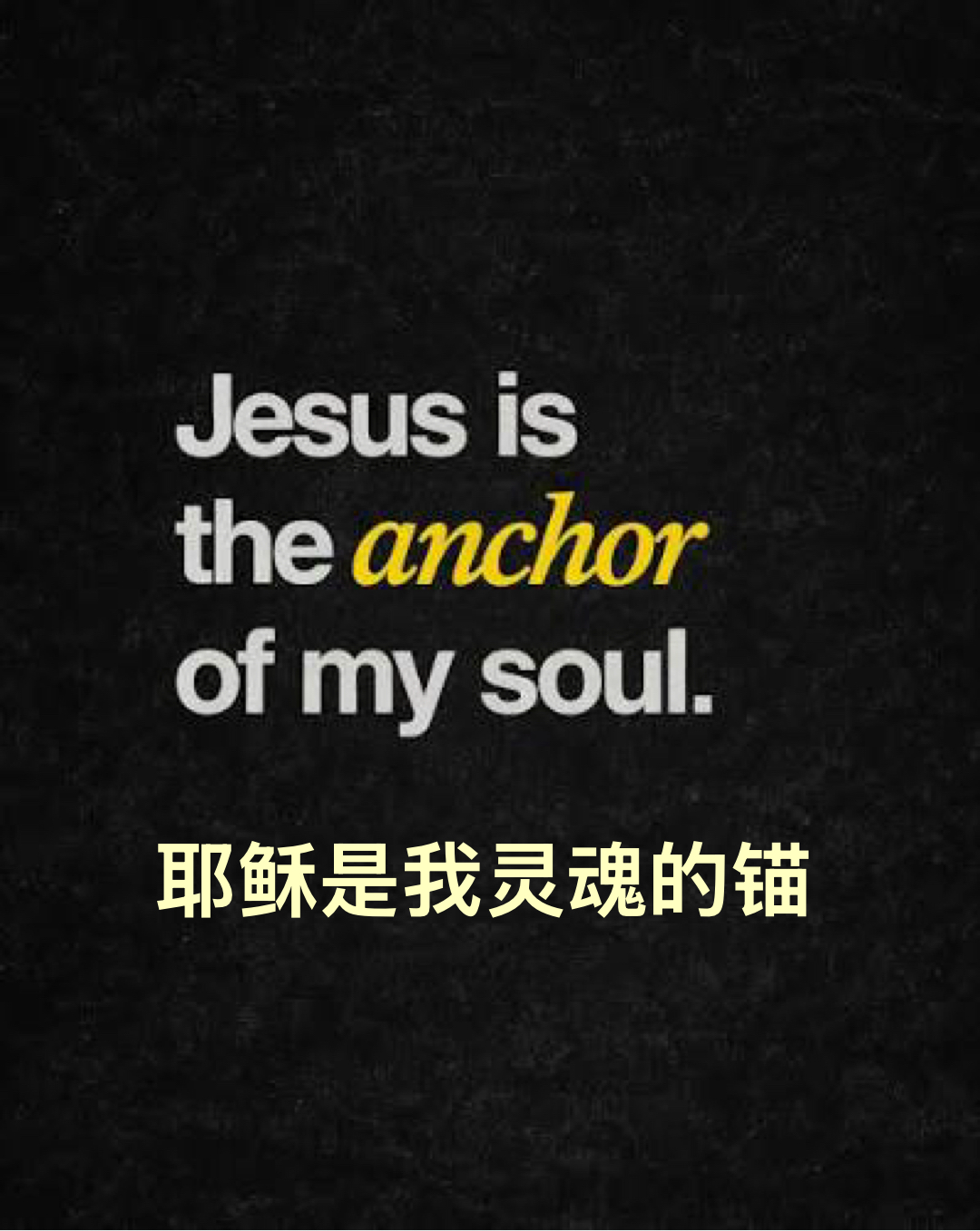
In the midst of this long and difficult journey, they continue to pray and hold firmly to God. When words fail and circumstances seem unchanged, faith becomes the quiet anchor of the soul.
Psalm 41:3 speaks directly into such moments: “The LORD sustains them on their sickbed.” Scripture does not say believers will never experience sickness. Instead, it gives us something equally precious: God will not abandon us in our weakness. When we no longer have the strength to carry ourselves, God carries us.
God’s restoration does not always happen instantly or in the way we expect. Sometimes it comes through skilled doctors and compassionate nurses. Sometimes through gradual physical improvement. Sometimes God strengthens the family with courage to face another day. And sometimes, while the body remains weak, He brings a deeper spiritual restoration—peace in the midst of uncertainty and hope in the midst of suffering.
Brother Lee’s journey also reminds us that those who suffer should never walk alone. We can become instruments of God’s sustaining grace through our prayers, presence, encouragement, and practical generosity.
Perhaps you are lying on your own “sickbed” today—physically, emotionally, or spiritually. Healing may seem distant and tomorrow uncertain. Hold firmly to this promise: God is near. He sees you. He sustains you. And even when you cannot see what He is doing, His hands are still holding you.
“When we are too weak to hold on to God, we discover that God is still holding on to us.”
 DAILY REFLECTION
11 Aug 2026
“Joy is gone from our hearts; our dancing has turned to mourning.” Lamentations 5:15
In 2014, I had the privilege of co-chairing an International Marriage Renewal Vow celebration in Sanya, Hainan, together with Professor Dr. Zhao. Nearly 100 couples from China, Southeast Asia, and the United States were expected to participate, with about 800 guests confirming their attendance. Many arrived several days early, filled with excitement and anticipation.
Then, just one day before the event, we were suddenly instructed by the authorities to stop all activities. Months of preparation, prayer, and anticipation came to an abrupt halt. Our guests had to return home. Those of us who remained toured Sanya in silence and disappointment. Local and international Christian leaders were closely monitored, and gatherings in restaurants and hotels were prohibited.
What was meant to be a joyful celebration suddenly became a season of sorrow. The words of Lamentations 5:15 came alive: “Joy is gone from our hearts; our dancing has turned to mourning.”
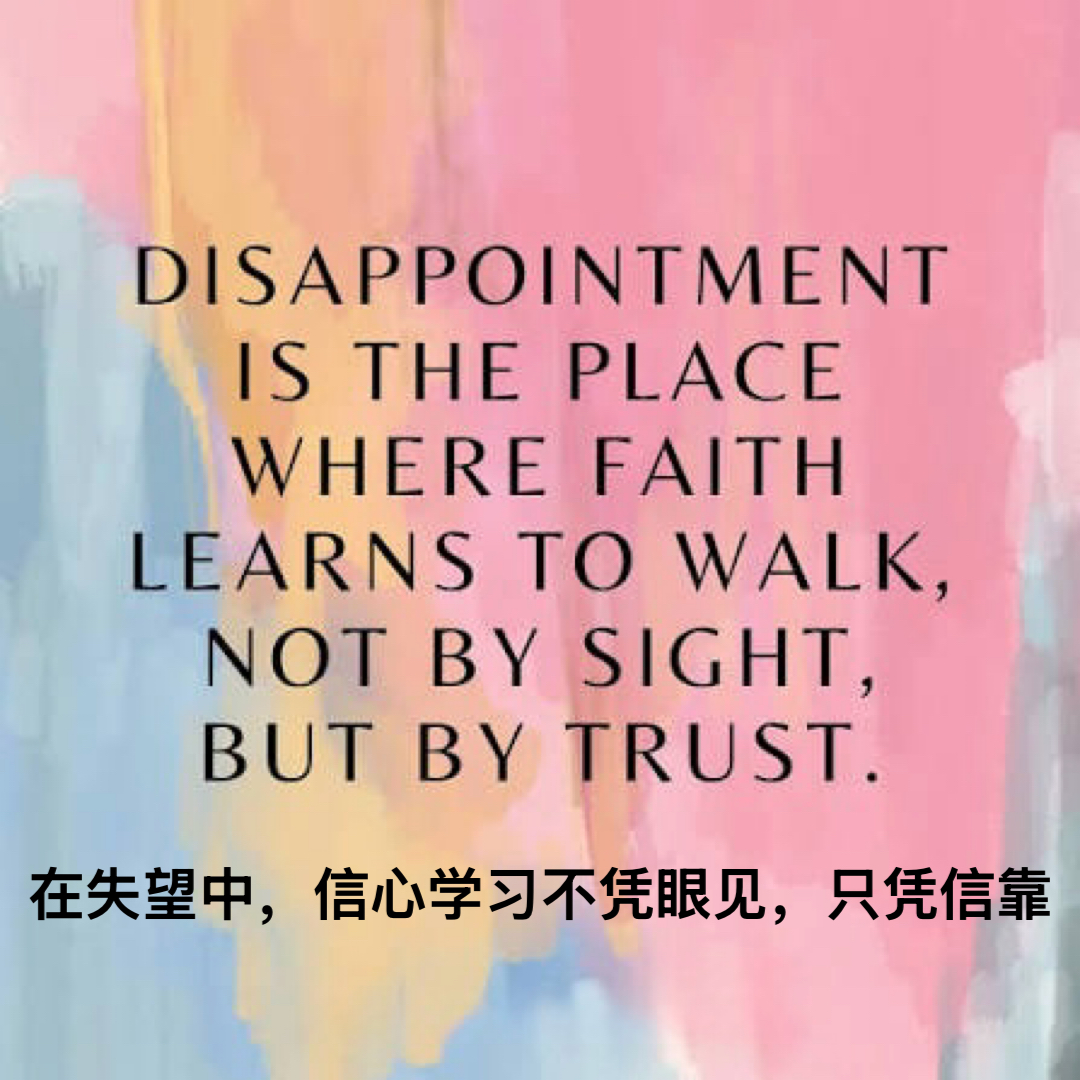
The people of Jerusalem understood what it meant for joy to disappear. Their city had fallen, their lives had been shattered, and celebration had been replaced by grief. Yet Lamentations teaches us an important truth: faith does not require us to deny our disappointment; it teaches us where to take it.
There will be moments when carefully made plans collapse, doors unexpectedly close, prayers seem unanswered, and celebration turns into sorrow. Disappointment does not necessarily mean that our faith is weak or that God has abandoned us.
Biblical lament gives us permission to come honestly before God. We can bring Him our tears, questions, confusion, and broken dreams. God is not threatened by our sorrow; He meets us in it.
When our plans are interrupted, God’s purposes are not. What appears to be an ending may still become part of His greater story.
“When the dancing stops, keep trusting God—the music of His grace has not ended.”
 DAILY REFLECTION
10 August 2026
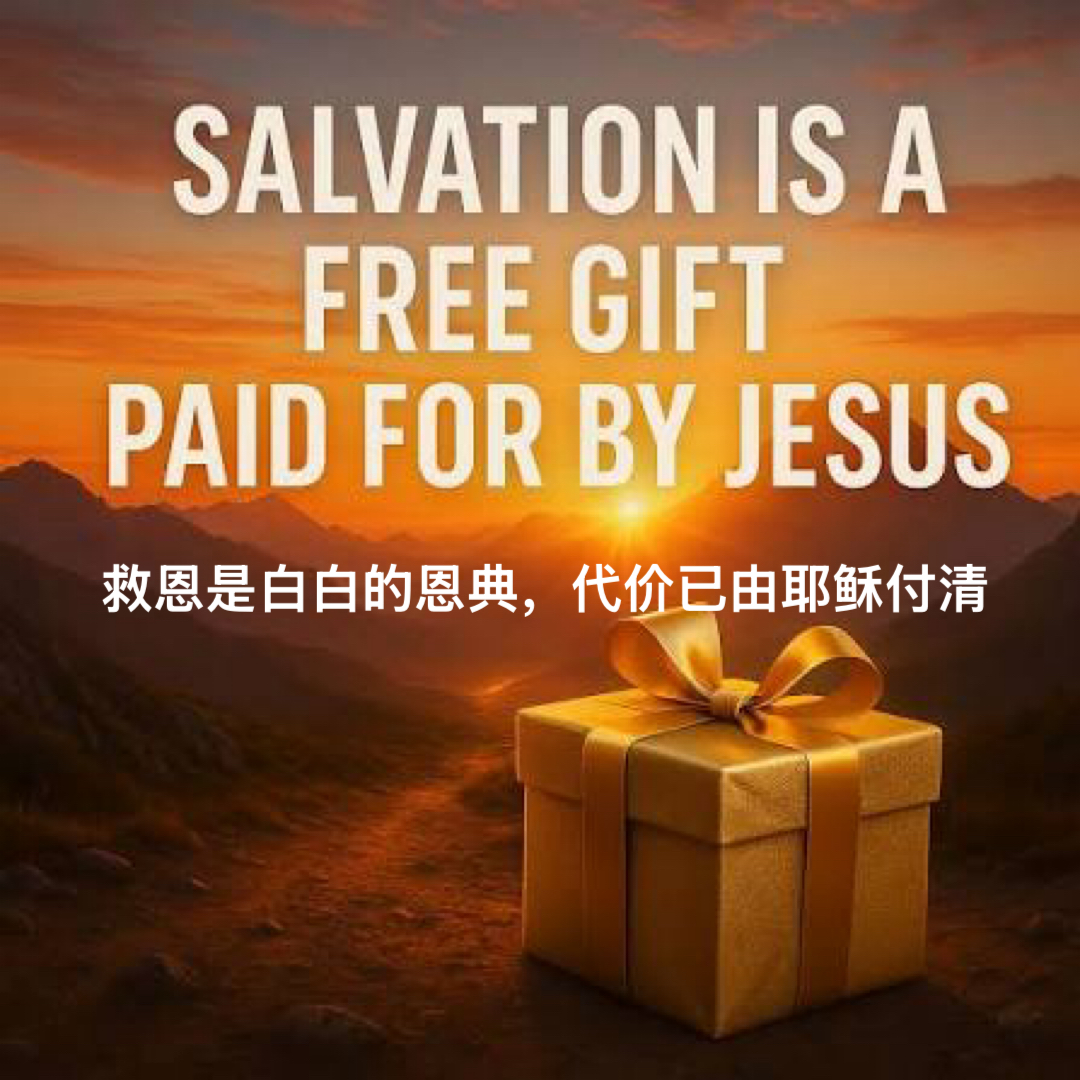
“For it is by grace you have been saved, through faith—and this is not from yourselves, it is the gift of God—not by works, so that no one can boast.”
— Ephesians 2:8–9
In 2011, I met Prof. Dr. Zhao when I hosted his delegation of 35 Chinese entrepreneurs in Kuala Lumpur for a dialogue with local Christian business leaders. A respected academic, he had served on an economic advisory team connected with the Chinese government.
Prof. Zhao was sent to Harvard University as a research scholar to study how American corporations operated differently from Chinese enterprises. But what began as an academic journey soon became a spiritual journey that changed his life forever.
While in Boston, he began visiting churches on weekends. At first, he simply wanted to understand Christianity and what Christians believed.
Then, during one Sunday service, something unexpected happened. Prof. Zhao experienced a powerful encounter with the Holy Spirit. His heart was deeply touched, and he surrendered his life to Jesus Christ.
Prof. Zhao later published an article entitled “The Enterprise of the Cross”, which reportedly attracted nearly ten million readers. His testimony also opened doors for him to speak among Christian communities.
Because of his bold witness for Jesus, he was removed from his official responsibilities and faced opposition. He persevered, trusting in the grace of God.
His story illustrates the truth of Ephesians 2:8–9.
Prof. Zhao had education, influence, status, and achievement. Yet none of these could save him. Salvation came not through what he had accomplished, but through what Christ had accomplished for him.
We cannot earn salvation through education, wealth, good works, religious activities, or social status. Salvation is a gift from God, received by faith in Jesus Christ.
Sometimes we may think we must first become good enough before God will accept us. But the gospel tells us otherwise. We come to Christ just as we are, with empty hands, and receive His grace by faith.
And the grace that saves us is also the grace that transforms us. It gives us courage to follow Christ faithfully, even when doing so becomes costly.
“Grace is not the reward for what we have achieved; it is the gift of what Christ has already accomplished.”
 DAILY REFLECTION
7 August 2026
“Because you know that the Lord will reward each one for whatever good they do, whether they are slave or free.” — Ephesians 6:8
Late Pastor Paul was a humble and devoted servant of God whose heart was deeply moved by the plight of the poor living in the narrow alleys of Kuala Lumpur’s Chow Kit area. Long before sunrise, he would quietly carry bags of food, clothing, and medicine into the community. His mission was simple yet profound—to demonstrate the love of Christ to people whom society had largely forgotten.
His ministry was neither easy nor glamorous. Each day brought uncertainty, danger, disappointment, and overwhelming needs. Yet Pastor Paul never sought recognition, applause, or earthly reward. His motivation came from the promise of Ephesians 6:8: “The Lord will reward each one for whatever good they do.” He understood that while people may overlook faithful service, God never does.
Pastor Paul’s life was a living testimony to this truth. He fed the hungry, comforted the lonely, prayed for the sick, and restored dignity to those who had been abandoned by society. Many who encountered his ministry later testified that his compassion became a turning point in their lives, leading them to experience the hope and love of Christ. Though Pastor Paul has gone home to be with the Lord, the fruit of his faithful service continues to bear witness to God’s grace.
Ephesians 6:8 reminds us that God sees every act of obedience performed for His glory, no matter how small or unnoticed it may seem. Whether we serve in the pulpit, the marketplace, our homes, or behind the scenes, our true audience is the Lord Himself. He measures our lives not by prominence or popularity, but by faithfulness.
Ephesians 6:8 reminds us that God’s rewards are not always immediate. Sometimes He rewards us through transformed lives, deeper spiritual maturity, greater opportunities to serve, or quiet joy that comes from walking in obedience. Ultimately, every faithful believer will receive the Lord’s perfect commendation when we stand before Christ.
If your service seems unnoticed today, do not lose heart. The God who sees in secret never forgets. No prayer offered, no sacrifice made, no act of kindness shown, and no faithful service rendered in His name is ever wasted. Continue serving with humility and perseverance, knowing that your labour in the Lord is never in vain.
“God never overlooks a faithful heart, even when the world does.”