Tyrannus Online Seminary
Site blog
DAILY REFLECTION
24 Dec 2025
“The people who walked in darkness have seen a great light; those who dwelt in a land of deep darkness, on them has light shone.”
Isaiah 9:2
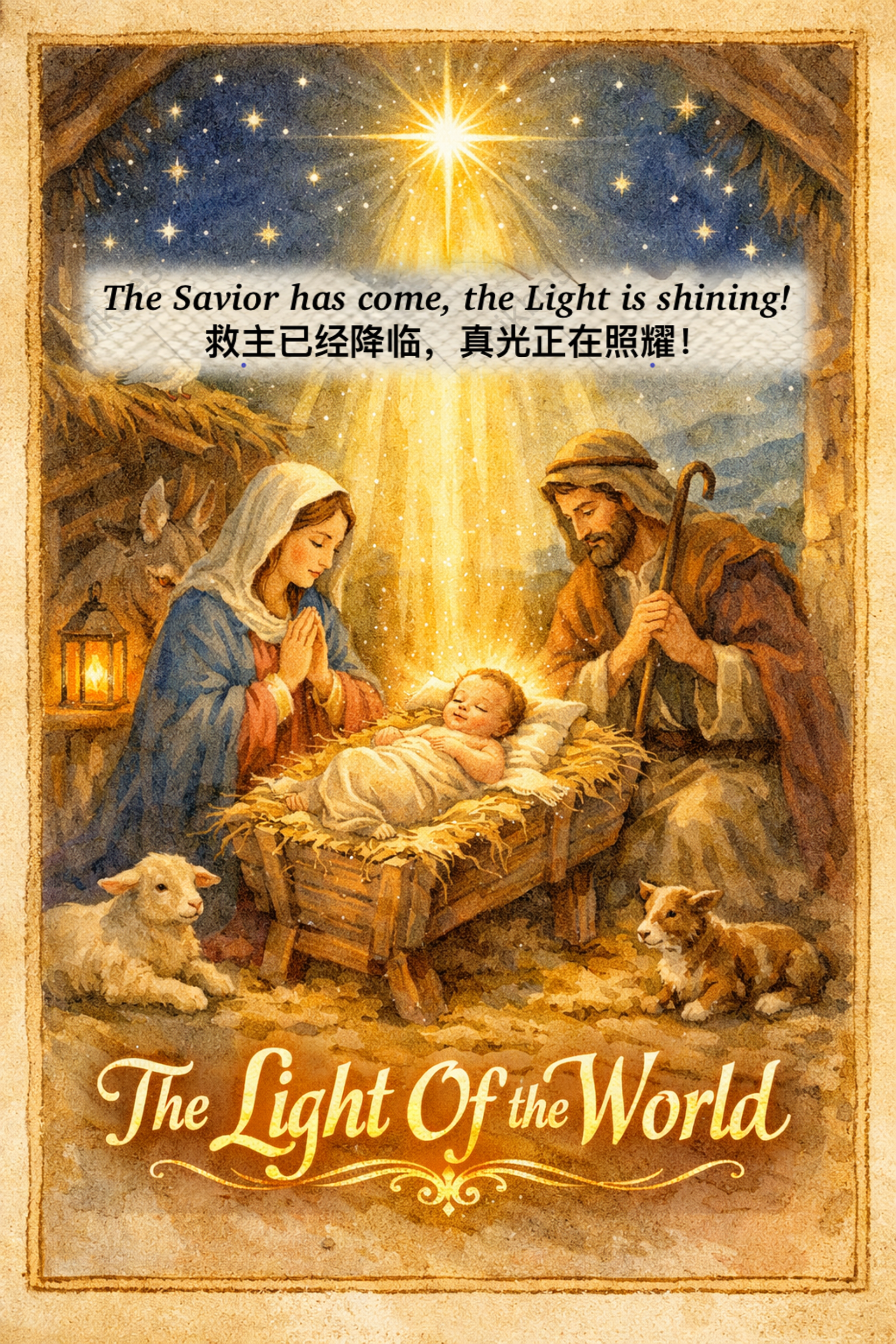
In the deepest and darkest night, a quiet yet powerful joy fills the world—the birth of a Savior. This is the night when God stepped into human brokenness and lit a light of hope for every weary heart.
Jesus was born in Bethlehem not among the powerful or the privileged, but among the poor and the overlooked. Laid in a manger, announced by angels, welcomed by shepherds, He came as the fulfillment of God’s promise. In Him, the long night began to end. He is the true Light, shining with humility, grace, and truth.
This Light does more than guide our steps; it shows us who God is. It reveals His nearness when we feel alone, His compassion when we are wounded, and His love when we feel undeserving. As Isaiah declared, darkness is not debated—it is driven away. Where Christ shines, fear gives way to hope, guilt to forgiveness, and death to life.
The birth of Jesus marks the turning point of history. Heaven has drawn near, God has entered our pain, and the shadows have been pierced by divine light.
Tonight, we rejoice because the Light has already dawned. In every struggle, every valley, and every weary soul, Christ is present. We are not left to walk in darkness alone. The Child born in Bethlehem is the Light of the world, and His presence assures us that darkness will never have the final word.
Isaiah 9:2 reminds us of God’s heart: He meets darkness with light and despair with hope. Therefore, we celebrate with joy—for the Savior has come, the Light is shining, and the night has given way to an everlasting dawn.
“For God so loved the world that he gave his one and only Son, that whoever believes in him shall not perish but have eternal life” -John 3:16
 DAILY REFLECTION
23 Dec 2025
“Come to me, all you who are weary and burdened, and I will give you rest.”
Matthew 11:28
True rest is found not in escape, but in drawing near to God. In His presence, weary souls are refreshed, tired hearts are renewed, and broken strength is gently restored by His grace and love.
Elijah, a mighty prophet of God, had just experienced a mighty victory over the prophets of Baal on Mount Carmel. Yet soon after, he found himself overwhelmed by fear, exhaustion, and despair when Queen Jezebel threatened his life. His battle was no longer external—it was the silent weight of burnout, loneliness, and shattered expectations pressing upon his soul.
At Horeb, God did not confront Elijah with thunder or fire. Instead, He came in a gentle whisper. Before giving any instruction or calling Elijah forward, God first cared for him—allowing him to rest, providing food, and listening to his pain. Only then did God invite Elijah to rise again, reassuring him that he was seen, heard, and never alone.
In the same way, Jesus lovingly invites all who are weary and burdened to come to Him. His promise reaches far beyond physical relief; it offers deep, abiding peace and renewal for the soul.
Matthew 11:28 reminds us that true rest is not found in withdrawing from God, but in drawing near to Him. In His presence, weary souls are lifted, strengthened, and renewed by His unfailing grace and love.
"If you look at the world, you'll be distressed. If you look within, you'll be depressed. If you look at God you'll be at rest".
-Corrie Ten Boom
 DAILY REFLECTION
22 Dec 2025
"Even my close friend, someone I trusted, one who shared my bread, has turned against me." Psalm 41:9
Few wounds cut deeper than betrayal. It is not the strike of an enemy that devastates us most, but the breaking of trust by those within our inner circle—those with whom we shared fellowship, loyalty, and life.
David, the shepherd boy who rose to be king, knew this pain intimately. His own son Absalom, whom he loved dearly, conspired against him. And Ahithophel, his trusted counselor and friend—one who had shared bread and counsel at David’s table—turned against him, siding with Absalom in rebellion.
Though chosen by God and anointed as king, David was not shielded from the anguish of broken trust. He tasted disappointment, grief, and the sting of betrayal. Yet David did not allow bitterness to consume him. He carried his lament into the presence of God, trusting that the Lord sees, judges righteously, and redeems what human faithlessness seeks to destroy.
David’s story reminds us that betrayal does not cancel God’s promises. Friends may abandon, confidants may fail, but God remains steadfast. He overturned the counsel of the betrayer, restored David, and reaffirmed His covenant love.
Psalm 41:9 assures us that God understands the anguish of broken trust and invites us to pour out our sorrow to Him and to anchor our hope not in human faithfulness, but in the unfailing love of the Lord who never betrays those who trust in Him.
“Betrayal is a crack in the mirror of trust. You can still see yourself, but it’s never whole again. “
 DAILY REFLECTION
18 Dec 2025
“For to us a child is born, to us a son is given, and the government will be on his shoulders. And he will be called Wonderful Counselor, Mighty God, Everlasting Father, Prince of Peace.” -Isaiah 9:6
In a world marked by uncertainty, the birth of Jesus proclaims the promise of new beginnings.
As Christians prepare to celebrate Christmas, we are reminded that the darkness Isaiah’s people endured—fear, injustice, and weariness closely mirrors the struggles of our own time. Yet Christmas declares that darkness does not have the final word. A child is born for us—not distant, but near. This is hope that draws close, assuring us that God is present even when life feels overwhelming.
Christmas also reveals the depth of God’s love. “A son is given” reminds us that God did not merely speak about love; He demonstrated it by giving His very Son. In the manger, we behold a love that stoops low, entering human weakness so that we might be raised to new life. This love calls us to live generously, forgive freely, and love sacrificially.
Christmas further redefines true authority. “The government shall be upon His shoulders.” The child lying in a manger is the Mighty God and the Prince of Peace. His kingdom is not established by force, but by righteousness, justice, and peace. Christmas invites us to place our trust in Him, allowing Christ to rule our hearts and guide our lives.
Christmas is God’s declaration to the world: He reigns, hope is alive, love is given, and peace has come.
“You don't have to see the whole staircase, just take the first step.” — Martin Luther King, Jr.
 DAILY REFLECTION
18 Dec 2025
“So do not fear, for I am with you; do not be dismayed, for I am your God. I will strengthen you and help you; I will uphold you with my righteous right hand “—Isaiah 41:10
Every “giant” we face in life is an invitation to trust God more deeply. When we place our battles into His hands, He transforms weakness into strength, fear into faith, and what seems impossible into a testimony of His triumph.
In the Valley of Elah, Israel’s army stood frozen in fear before Goliath—a Philistine warrior towering over nine feet tall, wrapped in heavy armor, wielding sword and spear. For forty days he mocked and defied the armies of the living God, silencing even the bravest soldiers. Then a young shepherd boy named David stepped forward. He carried no armor, no impressive weapons—only a sling and an unshakable confidence in the Lord. David declared with conviction, “You come against me with sword and spear, but I come against you in the name of the Lord Almighty.” When the stone left his sling, it struck Goliath down, and the impossible became reality. The victory was unmistakable: it was God’s power, not human strength, that prevailed.
Like David, we all encounter giants—financial pressure, health crises, broken relationships, daunting responsibilities, or spiritual battles that seem beyond us. These challenges intimidate and threaten to overwhelm us. Yet God speaks into our fear through Isaiah 41:10.
David’s story renews our courage. Victory is never determined by the size of the obstacle, but by the greatness of the God who stands with us. When we trust Him, every giant becomes an opportunity for God’s glory to be revealed through our lives.
Isaiah 41:10 encourages believers to confront their fears with confidence, reassuring them that God's presence, power, and righteousness are more than enough for any challenge. It urges God’s people to remain grounded in divine assurance rather than being overwhelmed by human limitations.
“Inaction breeds doubt and fear. Action breeds confidence and courage.”
 DAILY REFLECTION
17 Dec 2025
“The blessing of the Lord brings wealth, without painful toil for it.” (Proverbs 10:22 )
When God blesses, His gifts overflow far beyond material abundance. He grants peace that guards the heart, security that anchors the soul, and purpose that directs our steps.
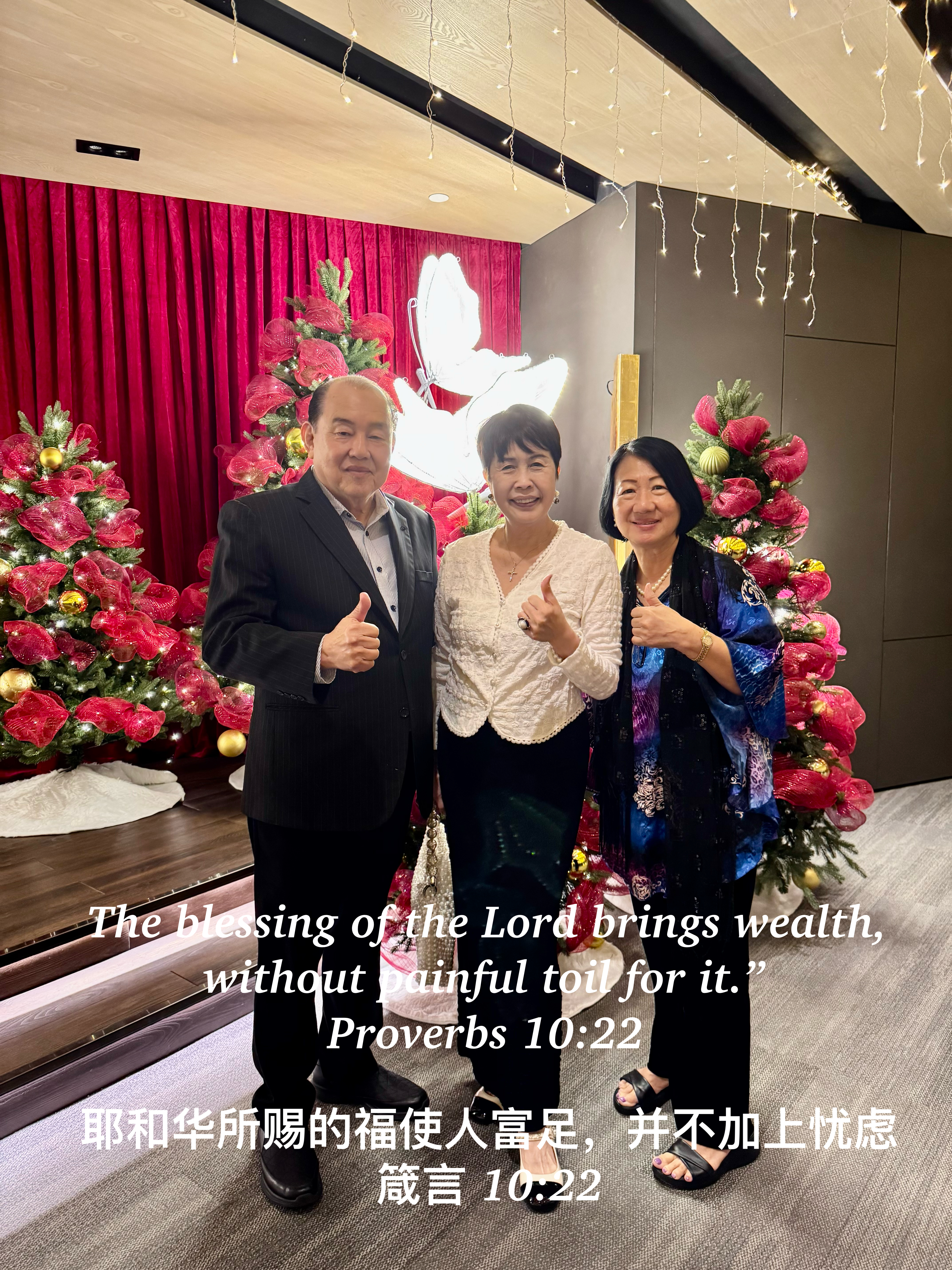
Yesterday, my wife and I were deeply privileged to attend TA’s annual Christmas thanksgiving lunch, graciously hosted by our dear friends Datuk Tony and Datin Alicia. This God-fearing couple, co-founders of the TA Group of Companies, have walked faithfully with the Lord since the late 1980s, building a business marked by resilience and innovation. Yet their true legacy is not measured in assets or accolades, but in faithful stewardship.
They view wealth not as personal ownership, but as a sacred trust from God. Out of gratitude to Him, generosity flows naturally—supporting education, caring for the poor, advancing the Gospel, and uplifting communities. Their giving is quiet and sincere, motivated not by recognition, but by reverence. In their lives, we see the truth of Jesus’ words: “Freely you have received; freely give” (Matthew 10:8).
TA’s story reminds us that when wealth is surrendered to God, it becomes a channel of blessing rather than a burden. Their faithful walk bears witness that the Lord’s blessing brings not only provision, but also peace, purpose, and joy—treasures that endure far beyond this lifetime.
May we, too, embrace the call to stewardship, choosing to live not for self-glory but for Kingdom impact. For in surrender, we discover that God’s richest blessings are not merely what we hold in our hands, but what He lovingly plants in our hearts.
Proverbs 10:22 invites us to seek God rather than wealth. When God is honored first, whatever He entrusts, much or little, becomes a source of blessing rather than burden.
“The essence of sustainable wealth is found in wise stewardship and generosity." -John Soforic
 DAILY REFLECTION
16 Dec 2025
“Whoever sheds human blood, by humans shall their blood be shed; for in the image of God has God made mankind.”
Genesis 9:6
Human life is sacred because every person bears the image of God. To unjustly take a life is not merely an act of violence against another human being; it is a profound violation of the Creator whose likeness that life reflects.
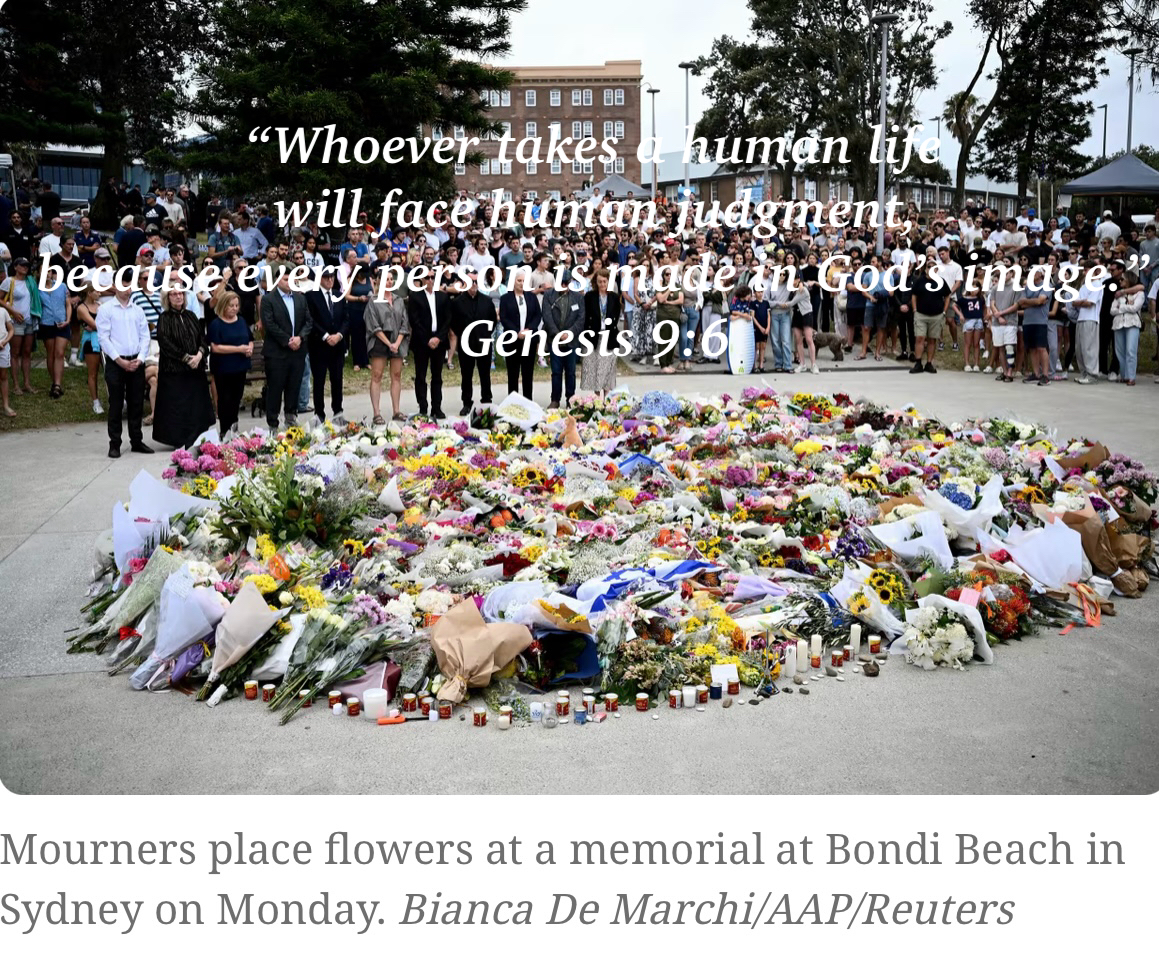
On 14 December 2025, as hundreds gathered at Sydney’s Bondi Beach to mark the first lights of Hanukkah—a festival that proclaims hope amid darkness—senseless violence erupted. Gunfire shattered a moment meant for remembrance and resilience, leaving at least fifteen dead and dozens more seriously wounded.
The loss is staggering. Each life taken carried stories, relationships, and futures now abruptly silenced. The grief does not rest with the victims alone; it radiates outward—into families, faith communities, and an entire city now burdened with sorrow and unanswered questions.
Such tragedy confronts us with enduring moral realities. What has gone so wrong that life can be discarded so easily? How do we resist the spiral of hatred and fear that fuels such destruction? In moments like these, humanity’s deepest cry emerges—not only for justice, but for healing, repentance, and a renewed commitment to cherish life.
As communities mourn together, their shared grief becomes a solemn witness: life is of immeasurable worth. From Genesis onward, Scripture affirms that every human being reflects God’s glory. Even in the shadow of violence, we are called to uphold that truth—to protect life, to honor dignity, and to choose compassion over indifference.
Genesis 9:6 reminds us that the preservation of life is a sacred trust. When human life is honored, justice is upheld, and violence is restrained, humanity reflects God’s character and His original design for the world.
“Life is a gift from a loving God, and we are stewards of that gift, called to respect and protect it."
DAILY REFLECTION
15 Dec 2025
“In this world you will have trouble. But take heart! I have overcome the world.”
John 16:33
Throughout history, we see ordinary people who, through extraordinary courage, become instruments of hope.
In 2014, Malala Yousafzai became the youngest recipient of the Nobel Peace Prize for her advocacy of girls’ right to education in a region where the Taliban’s strict interpretations of Sharia law forbade girls from attending school. As a young girl in Pakistan, she faced violent opposition that culminated in an assassination attempt. Her world was marked by fear, pain, and injustice. Yet her response was not silence or hatred, but courage, forgiveness, and an unwavering commitment to peace.
Her life illustrates a profound truth: hope can rise from trauma, and courage can be born in the midst of pain. While her strength is human, it points us toward a deeper reality—the eternal hope found in Christ.
For the same God who sustained Malala in her trial, is the God who calls us today to live as witnesses of His transforming hope.
John 16:33 calls us to face the world honestly yet live boldly. We are reminded that trouble may shape our journey, but it does not define our destiny. Peace is possible, courage is sustainable, and hope endures because the One who overcame the world walks with us still.
“Life is like riding a bicycle. To keep your balance, you must keep moving."
– Albert Einstein
 DAILY REFLECTION
12 Dec 2025
“In their hearts humans plan their course, but the Lord establishes their steps.”
Proverbs 16:9
God calls His people to make plans prayerfully, not by clinging to their own desires, but by seeking His leading and trusting His higher purposes.
Jonah, a prophet, was called to go to Nineveh and deliver a message of repentance. However, driven by fear and prejudice for the Ninevites, he devised his own plan to flee in the opposite direction to Tarshish. He was convinced he could chart his own direction and escape the uncomfortable assignment God had given him.
The storm that stopped Jonah was no accident—it was divine intervention. The belly of the great fish became a holy place of surrender, where Jonah learned that God’s purposes cannot be thwarted. In that hidden place, Jonah discovered that our ways, no matter how determined, are never greater than His.
When Jonah finally entered Nineveh, he did so not as a flawless prophet but as a humbled servant, reshaped by grace. And even then, God continued His work—teaching Jonah compassion, correcting his heart, and showing that divine purpose is not only about the mission we fulfill, but the character He forms within us.
Jonah’s story reminds us that when we yield our lives to God, we step into a purpose far beyond anything we could design ourselves. His ways are higher, His wisdom deeper, and His love greater than all we could imagine.
“Never be afraid to trust an unknown future to a known God." - Corrie ten Boom
DAILY REFLECTION
11 Dec 2025
“Do your best to present yourself to God as one approved, a worker who does not need to be ashamed and who correctly handles the word of truth."
2 Timothy 2:15
Every believer entrusted with teaching, leading, or serving must be rooted in diligence, integrity, and unwavering faithfulness—living out these virtues in every aspect of life.
Silas, a trusted companion of the Apostle Paul, stands as a shining example of such devotion. He played a vital role in the Second Missionary Journey alongside Paul and Timothy, not seeking recognition but embodying steadfast discipleship marked by spiritual maturity and integrity.
Grounded in the Word, Silas proved dependable in leadership. His willingness to cross rugged terrains, endure persecution, and strengthen young believers revealed a heart wholly committed to God. He proclaimed the Word with clarity, humility, and conviction.
After being beaten and imprisoned in Philippi, he did not yield to fear or discouragement. At midnight, he lifted his voice in prayer and worship, demonstrating a life anchored in the truth he proclaimed. His faith not only encouraged Paul but also ushered in God’s miraculous intervention—the salvation of the jailer and his household.
Silas’ testimony continues to inspire us to persevere with courage, to serve with integrity, and to remain unwavering in God’s calling, no matter the cost.
2 Timothy 2:15 challenges every believer to pursue excellence in their relationship with God, to be trustworthy stewards of Scripture, and to serve with unwavering integrity.
"Excellence is the gradual result of always striving to do better.”